
What Are Chemical Peels and What Do They Treat?
A chemical peel is a skin treatment that applies an acid solution to remove damaged outer layers of skin in a controlled way. New, smoother and more even skin grows back in its place.
Dr. Umbreen Munir Minhas works as a reconstructive surgeon in Islamabad, restoring function and shape after burns, injuries, birth differences and cancer surgery, planning each repair around how you need to live and work.

Medically reviewed by Dr. Umbreen Munir Minhas, MBBS, FCPS (Plastic Surgery). Last updated October 2026.


 Trustindex verifies that the original source of the review is Google.
 Trustindex verifies that the original source of the review is Google.
 Trustindex verifies that the original source of the review is Google.
 Trustindex verifies that the original source of the review is Google.
 Trustindex verifies that the original source of the review is Google.
 Trustindex verifies that the original source of the review is Google.
 Trustindex verifies that the original source of the review is Google.
 Trustindex verifies that the original source of the review is Google.
 Trustindex verifies that the original source of the review is Google.
 Trustindex verifies that the original source of the review is Google.
Reconstructive surgery repairs tissue damaged by injury, burns, disease or birth differences, using skin grafts, flaps, tendon and nerve repair, and scar release to restore movement and form.
It is a large part of plastic surgery. In 2023, members of the American Society of Plastic Surgeons performed 1,025,100 reconstructive procedures.
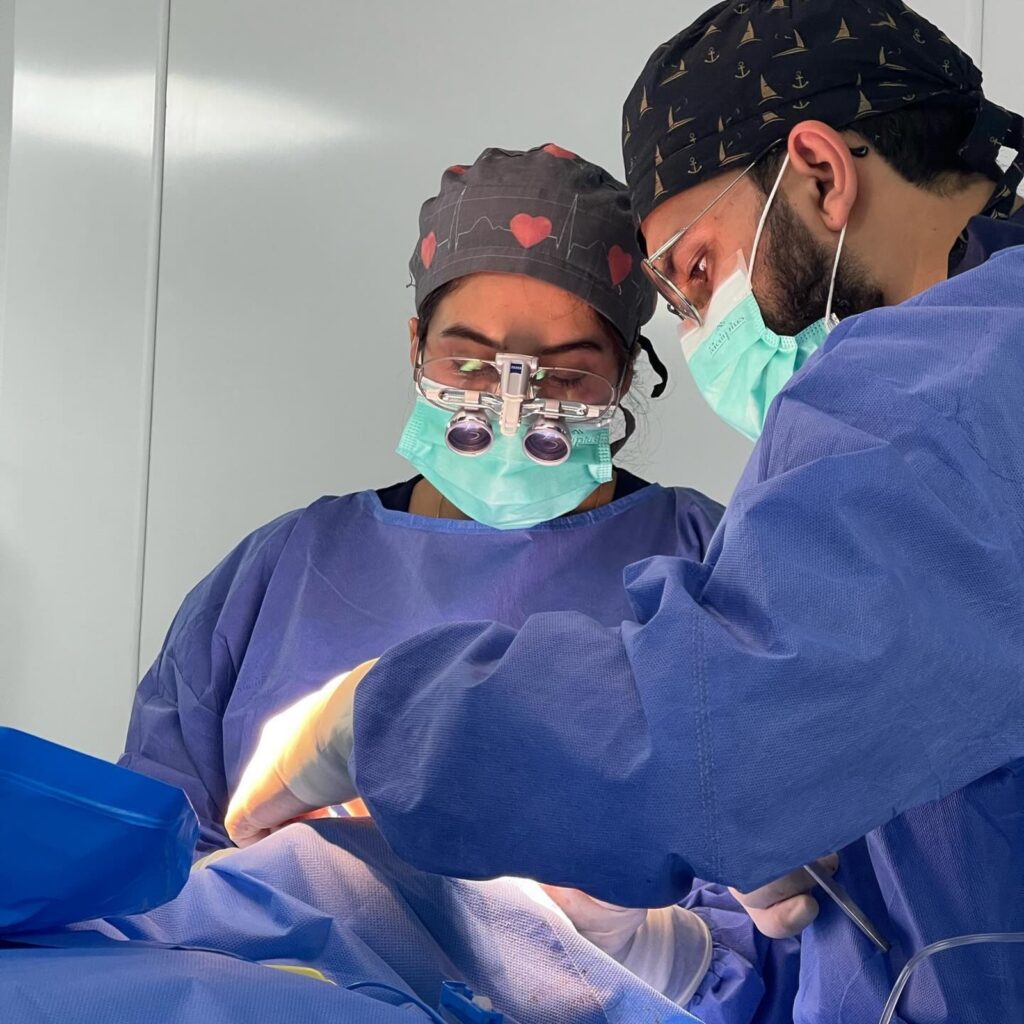
Burns can leave tight scars across joints, the neck or hands that limit movement. Release and grafting restore range and comfort.
Cuts, crush injuries and machine accidents damage tendons, nerves and skin. Hand surgery was the second most common reconstructive group in ASPS data.
Cleft lip and palate, ear differences and hand differences present from birth can be corrected to improve function and appearance.
Removing skin, head and neck tumours, or repairing major wounds, leaves gaps that grafts and flaps cover. Tumour removal led ASPS figures at 351,591.
Repairs torn, split or stretched earlobes, often caused by earrings. Read about earlobe repair
Improves wide, raised or tight scars from injury or surgery. Read about scar revision
Covers wounds and defects with skin or tissue that has its own blood supply. Read about grafts and flaps
Repairs injured tendons, nerves and skin, and corrects hand differences. Read about hand surgery
Releases tight burn scars and improves movement once wounds have healed. Read about burn care
Plans closure of slow-healing and complex wounds with the right team. Read about wound care
The first goal is function: movement, closure and comfort. Appearance improves too, but reconstructed tissue never matches untouched skin exactly. Photos below are shared with patient consent.


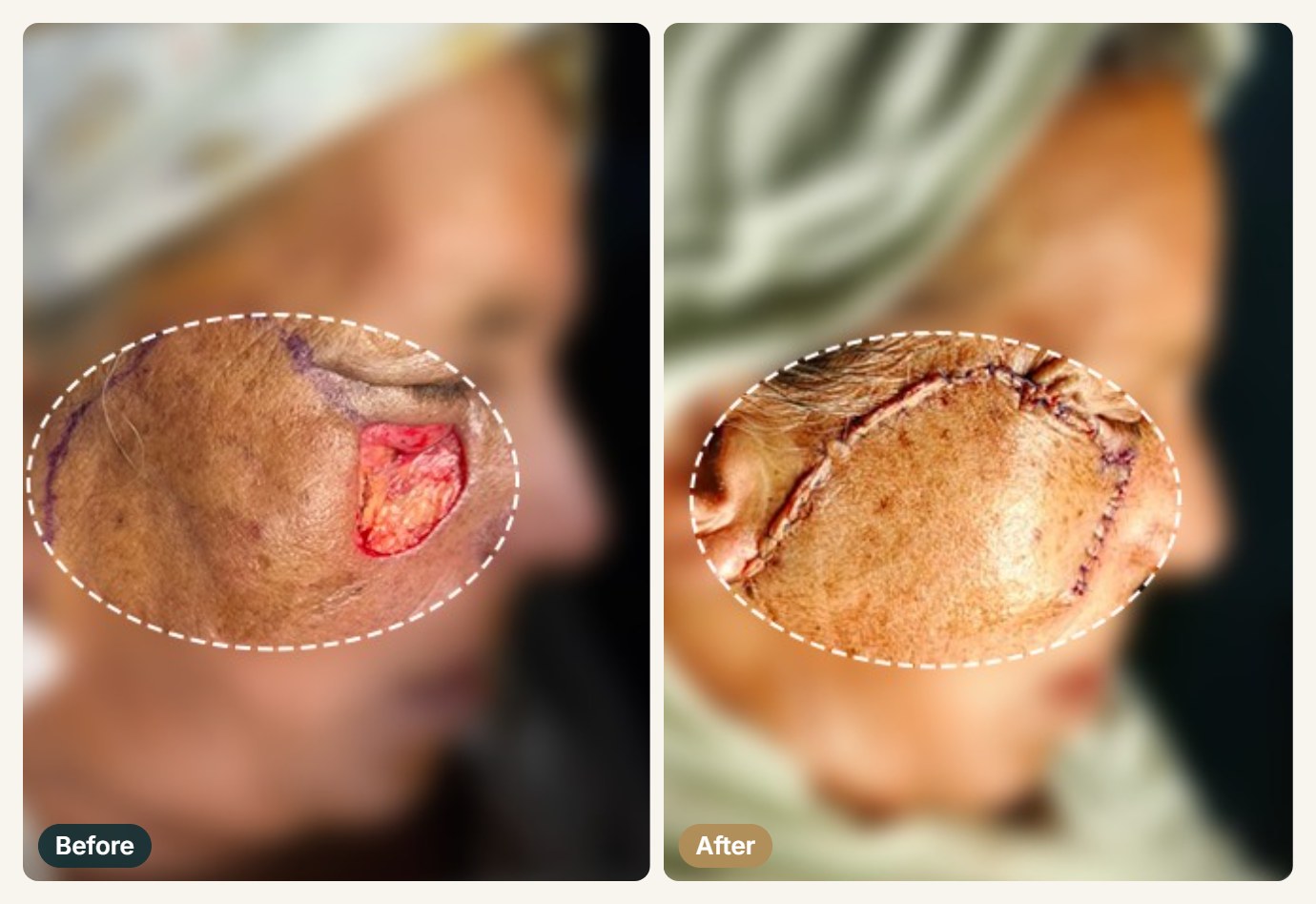
Illustrative images. See Dr. Umbreen Munir Minhas’s patient results in the before and after gallery.
| Your Concern | Suggested Treatment | Treatment Type |
|---|---|---|
| Torn or stretched earlobe | Earlobe repair | Minor procedure, local anesthesia |
| Wide, raised or tight scar | Scar revision | Surgery with scar care |
| Skin loss after injury or tumour removal | Skin grafts and flaps | Surgery in hospital |
| Cut tendon, nerve injury or stiff finger | Hand surgery | Surgery and hand therapy |
| Tight burn scar limiting movement | Burn reconstruction | Staged surgery |
| Wound not healing after weeks | Wound care | Dressings, then closure |
Dr. Umbreen Munir Minhas checks movement, sensation and skin quality, and asks what you need to do at work and home that the problem prevents.
Earlier operation notes, scans and photos help plan the repair. X-rays or nerve tests may be arranged before surgery.
Larger repairs are often done in stages, with therapy between them, so each step heals well before the next begins.
Each procedure page lists its own risks. Across reconstructive work, Dr. Umbreen Munir Minhas explains these before you sign consent:
It cannot fully restore tissue to how it was before injury. Severe nerve damage, deep burns and long-standing stiffness may improve only partly.
Each fee is confirmed after assessment, once the procedure and stages are agreed. Ask for one written estimate covering surgeon, anesthesia and hospital.
| Factor | How It Affects Your Fee |
|---|---|
| Complexity | A small earlobe repair costs far less than flap surgery. |
| Stages | Staged repairs are priced per operation. |
| Hospital stay | Overnight stays and dressings add to the total. |
| Therapy | Hand or burn therapy after surgery is separate. |
Check if your health insurance or employer panel covers reconstructive work, as it often differs from cosmetic surgery.
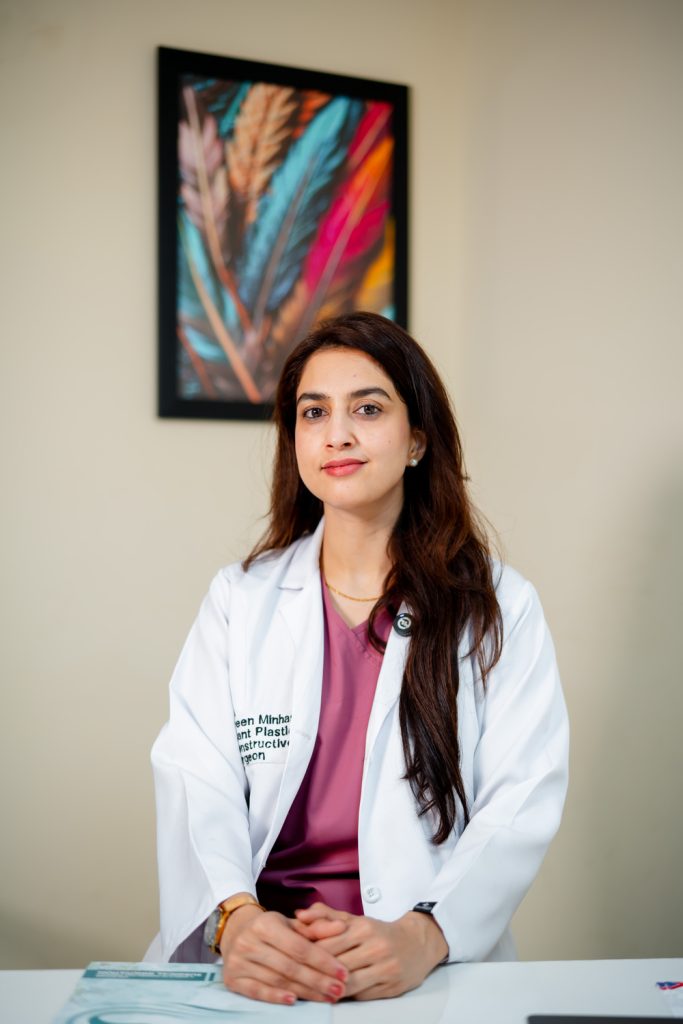
Her public profile is strongly reconstructive, listing burns, hand injuries, cleft lip and palate, facial nerve palsy, nerve injuries, head and neck reconstruction, skin grafts and flaps.
As a plastic reconstructive surgeon, she plans every repair for function first.
Cosmetic surgery changes healthy tissue for appearance, while reconstruction repairs tissue that is damaged or missing.
| Feature | Reconstruction | Cosmetic Surgery |
|---|---|---|
| Main aim | Function and closure | Appearance |
| Starting point | Injury, burn, disease or birth difference | Healthy tissue |
| Timing | Sometimes urgent, often staged | Planned when you choose |
| Therapy afterwards | Often needed | Rarely |
| Insurance cover | Sometimes | Usually not |
Many operations combine both, such as scar revision that improves movement and appearance at the same time.
Dr. Umbreen Munir Minhas sees patients privately at Omer Diagnostic & Specialist Clinics (ODC), 12-A, LG Floor, CBC Plaza, G-8 Markaz, Islamabad, Monday to Saturday, 11:00 AM to 6:00 PM.
Bring earlier operation notes, scan reports and photos of the injury. For a fresh or severe injury, go to a hospital emergency department first.
Choose an FCPS-qualified plastic surgeon with a reconstructive practice in your problem area, who explains the stages, therapy and realistic function you can expect afterwards.
You are numbed or asleep during surgery. Pain afterwards depends on the operation and is managed with medicines, rest and elevation of the treated area.
Repaired tendons, grafts and flaps become a lasting part of your body once healed. Scars keep maturing for months, and children may need further surgery as they grow.
Yes. Cleft lip, burns and hand injuries are common reasons in children. Timing is planned around growth, and some children need staged operations over several years.
Often, yes. Hand and burn repairs need exercises, splints or pressure care to keep the movement gained in surgery. Dr. Umbreen Munir Minhas arranges this as part of the plan.
Many can. Old scars and contractures are often released years later. Nerve and tendon repairs give stronger results early, so delayed cases may need grafts or transfers.
Patient guides from Dr. Umbreen Munir Minhas’s blog.
A chemical peel is a skin treatment that applies an acid solution to remove damaged outer layers of skin in a controlled way. New, smoother and more even skin grows back in its place.
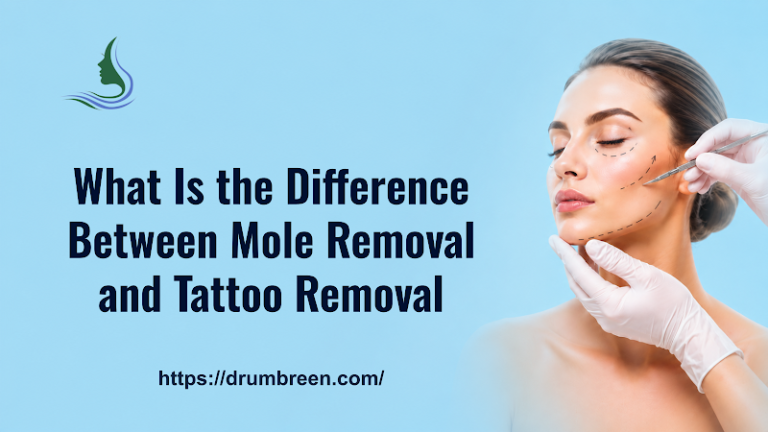
A mole is a growth of your own pigment cells, so removing it is a medical decision that may need a laboratory check. A tattoo is ink placed in the skin from outside, so removing it is about breaking that ink down, usually with…
Moles are removed safely by a doctor, under local anaesthetic, using a method chosen after the mole has been examined. The most important safety step is checking whether the mole needs to be sent to a laboratory before anything…