How Long Is Downtime After a Chemical Peel?
Downtime after a chemical peel ranges from almost none for a light peel to about 7 to 10 days for a medium peel. Deep peels need two weeks or more and are rarely used on brown skin.
Dr. Umbreen Munir Minhas is a burn surgeon in Islamabad who plans care for healing burns and rebuilds movement and appearance after burn scars tighten, in adults and children.

Medically reviewed by Dr. Umbreen Munir Minhas, MBBS, FCPS (Plastic Surgery). Last updated October 2026.


 Trustindex verifies that the original source of the review is Google.
 Trustindex verifies that the original source of the review is Google.
 Trustindex verifies that the original source of the review is Google.
 Trustindex verifies that the original source of the review is Google.
 Trustindex verifies that the original source of the review is Google.
 Trustindex verifies that the original source of the review is Google.
 Trustindex verifies that the original source of the review is Google.
 Trustindex verifies that the original source of the review is Google.
 Trustindex verifies that the original source of the review is Google.
 Trustindex verifies that the original source of the review is Google.
A burn surgeon treats deep burns that need grafting and, later, the scars and contractures they leave. A contracture is a tight scar that pulls a joint, finger, neck or eyelid out of position.
A fresh, large or electrical burn is an emergency and needs a hospital emergency department or burns centre straight away. The clinic is for assessment and planned care.
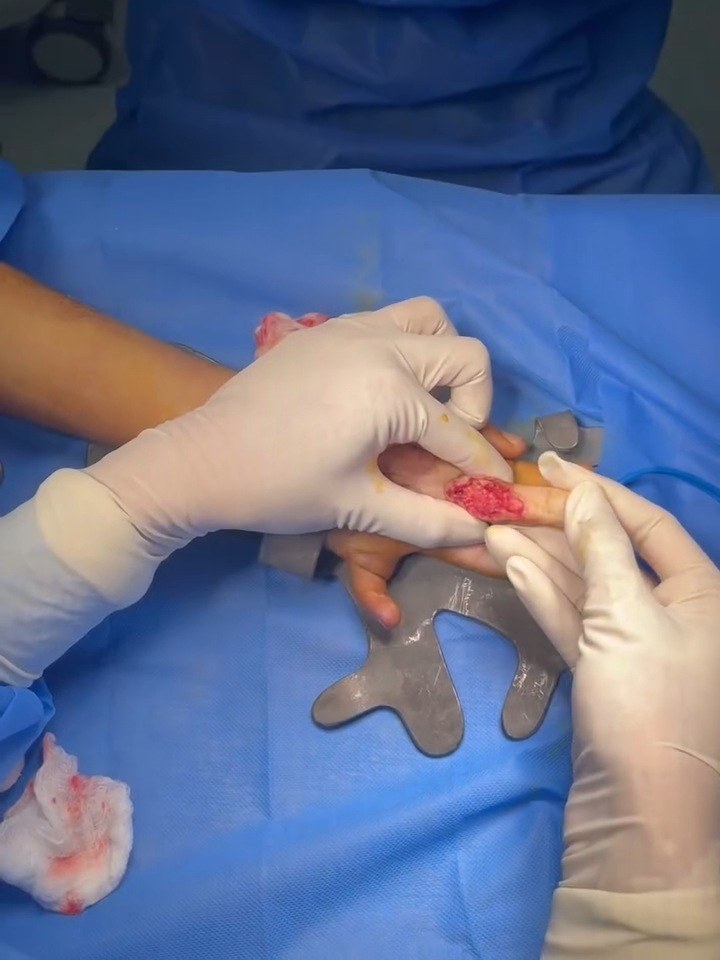
Hot tea, milk and bath water cause many burns in Pakistani homes. Scalds made up 48.7% of child burns across Pakistani studies.
Burns through the full skin cannot regrow it. In one study of 104 children, 53.8% healed with dressings while 17.3% needed surgery.
Burn scars shrink as they mature. Across the neck, armpit, elbow or hand they can limit movement and daily tasks.
Thick hypertrophic burn scars itch, hurt and break down easily. They also affect confidence, especially on the face and hands.

Massage, silicone, splints and pressure garments are used while scars are still active, before any surgery is planned.
The tight band is cut across to free the joint, and the gap is filled with a graft or flap to stop it tightening again.
Narrow scar bands are lengthened by swapping small triangles of skin. It suits bands across fingers, armpits or the neck.
Release surgery usually improves movement clearly. Scars soften and flatten over months, but burned skin never looks like untouched skin. Photos below are shared with patient consent.

Illustrative images. See Dr. Umbreen Munir Minhas’s patient results in the before and after gallery.
Dr. Umbreen Munir Minhas checks the scar’s maturity, the range of movement it allows and the skin available nearby for grafts or flaps.
Scar care and splinting continue until surgery. Any open areas are healed first, and nutrition and blood counts are checked for larger operations.
Under general or regional anesthesia, the tight scar is released and the gap is covered. Large areas may be treated in stages.
A splint holds the joint stretched while the graft heals. Physiotherapy and pressure garments then keep the new range of movement.
| Time After Surgery | What to Expect |
|---|---|
| Days 1 to 5 | The area is kept still while the graft attaches. |
| Week 1 | First dressing change to check the graft. |
| Weeks 2 to 4 | Gentle movement and splinting begin. |
| Months 1 to 6 | Pressure garments and massage shape the scar. |
| Months 12 to 18 | Scars mature and further stages are planned. |
Moisturise healed skin often, keep it out of strong sun and wear splints exactly as advised, especially at night.
Burned tissue heals less predictably than normal skin. Pressure garments are standard care, though a Cochrane review rated the evidence for them as very low certainty.
It cannot restore normal skin colour, sweating or hair in burned areas. Children often need further release as they grow.
Your fee is confirmed after assessment, once the stages are planned. Ask for one written estimate for each stage, including hospital and therapy.
| Factor | How It Affects Your Fee |
|---|---|
| Area and number of joints | Larger scars need longer surgery. |
| Graft or flap | Flaps take more theatre time. |
| Stages | Many burn scars need more than one operation. |
| Garments and splints | Custom pressure garments are separate. |
Some welfare programmes and employer panels support burn care, so ask about these before planning staged surgery.
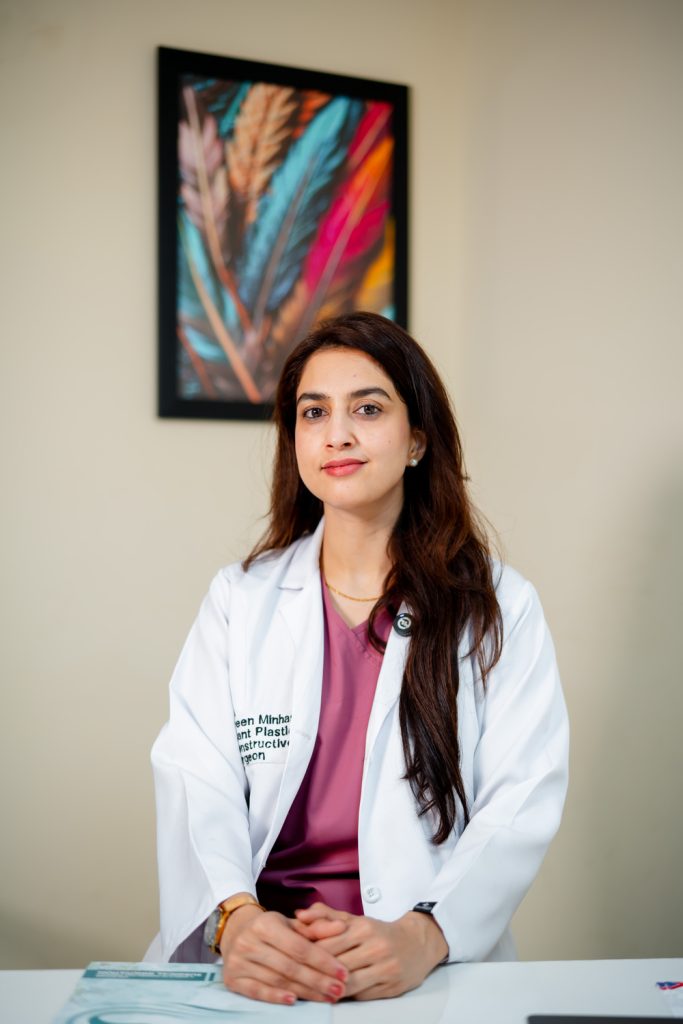
She is listed publicly as a burns specialist treating acute and chronic burns, with skin grafts, flaps and hand surgery among her services. A parent’s public review describes her treating a daughter’s hand burns.
Early care heals the burn wound itself, while reconstruction treats the scars and tightness that follow once healing is complete.
| Feature | Early Burn Care | Later Reconstruction |
|---|---|---|
| Timing | Days to weeks after injury | Months to years later |
| Main goal | Close the wound, prevent infection | Restore movement and appearance |
| Where | Hospital emergency or burns unit | Planned surgery |
| Typical treatment | Dressings and early grafts | Release, grafts, flaps, scar care |
| Therapy | Splints from the start | Splints and garments after surgery |
Good early care, especially early splinting and grafting of deep burns, lowers the amount of reconstruction needed later.
Dr. Umbreen Munir Minhas sees patients privately at Omer Diagnostic & Specialist Clinics (ODC), 12-A, LG Floor, CBC Plaza, G-8 Markaz, Islamabad, Monday to Saturday, 11:00 AM to 6:00 PM.
Bring hospital discharge notes and photos from the time of the burn. For a new burn, seek emergency care first.
Choose a plastic surgeon with a real burns practice who plans scar care, splints and staged surgery together, and who works with physiotherapists after release.
You are asleep or numbed during surgery. Graft donor sites are sore for some days, and pain relief, elevation and gentle dressings keep you comfortable.
Released joints and grafted skin are long-lasting changes. Scars can slowly tighten again without splints, and children may need further surgery as they grow taller.
Scar care starts as soon as the wound heals. Surgery is often delayed until scars mature, unless a contracture threatens an eyelid, joint or child’s growth.
Cool water only, for about 20 minutes, then a clean cover. Avoid toothpaste, ice, butter or home remedies, which can deepen the burn or cause infection.
Yes. Contractures and scars from many years ago can still be released and resurfaced. Function and appearance can often improve at any age, even decades later.
Patient guides from Dr. Umbreen Munir Minhas’s blog.
Downtime after a chemical peel ranges from almost none for a light peel to about 7 to 10 days for a medium peel. Deep peels need two weeks or more and are rarely used on brown skin.

A chemical peel is a skin treatment that applies an acid solution to remove damaged outer layers of skin in a controlled way. New, smoother and more even skin grows back in its place.
Moles are removed safely by a doctor, under local anaesthetic, using a method chosen after the mole has been examined. The most important safety step is checking whether the mole needs to be sent to a laboratory before anything…