How Long Is Downtime After a Chemical Peel?
Downtime after a chemical peel ranges from almost none for a light peel to about 7 to 10 days for a medium peel. Deep peels need two weeks or more and are rarely used on brown skin.
CO2 laser in Islamabad with Dr. Umbreen Munir Minhas resurfaces damaged skin by removing thousands of tiny columns of old tissue, so your skin heals with smoother texture and fresh collagen.

Medically reviewed by Dr. Umbreen Munir Minhas, MBBS, FCPS (Plastic Surgery). Last updated October 2026.


 Trustindex verifies that the original source of the review is Google.
 Trustindex verifies that the original source of the review is Google.
 Trustindex verifies that the original source of the review is Google.
 Trustindex verifies that the original source of the review is Google.
 Trustindex verifies that the original source of the review is Google.
 Trustindex verifies that the original source of the review is Google.
 Trustindex verifies that the original source of the review is Google.
 Trustindex verifies that the original source of the review is Google.
 Trustindex verifies that the original source of the review is Google.
 Trustindex verifies that the original source of the review is Google.
A carbon dioxide (CO2) laser emits light at 10,600 nm, which is absorbed by water in the skin and vaporises it. This makes it a form of ablative laser skin resurfacing.
A fractional CO2 laser treats only a fraction of the skin in tiny dots, leaving healthy skin between them. That untouched skin speeds healing and lowers risk compared with treating the whole surface.
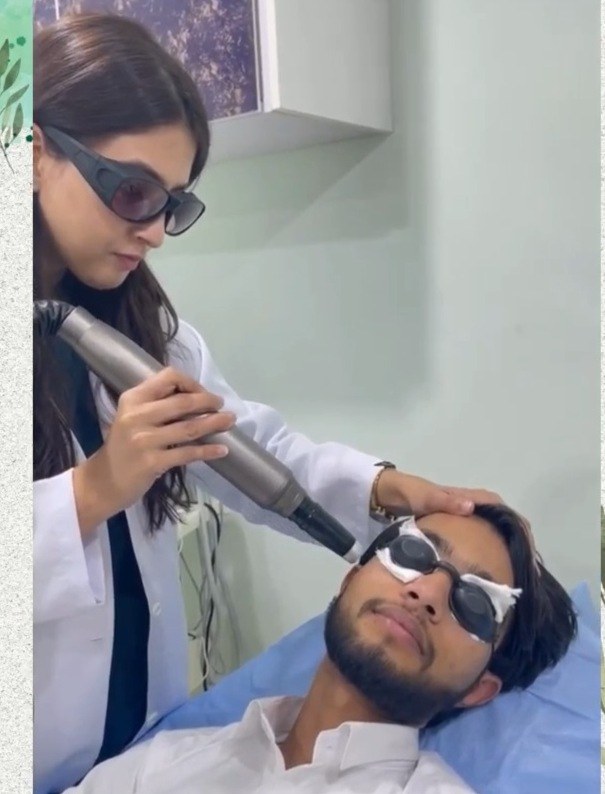
Pitted and rolling scars stay after acne settles. In an Asian study, 62% of patients rated their scars at least 50% better 6 months after treatment.
Lines around the eyes and mouth deepen as collagen thins. Resurfacing tightens the skin surface and softens these fine lines.
Years of strong sun leave rough, uneven skin with large pores. Removing the damaged surface lets smoother skin grow in its place.
Flat or raised scars from cuts, burns or surgery can blend better after resurfacing, once the scar has fully matured.
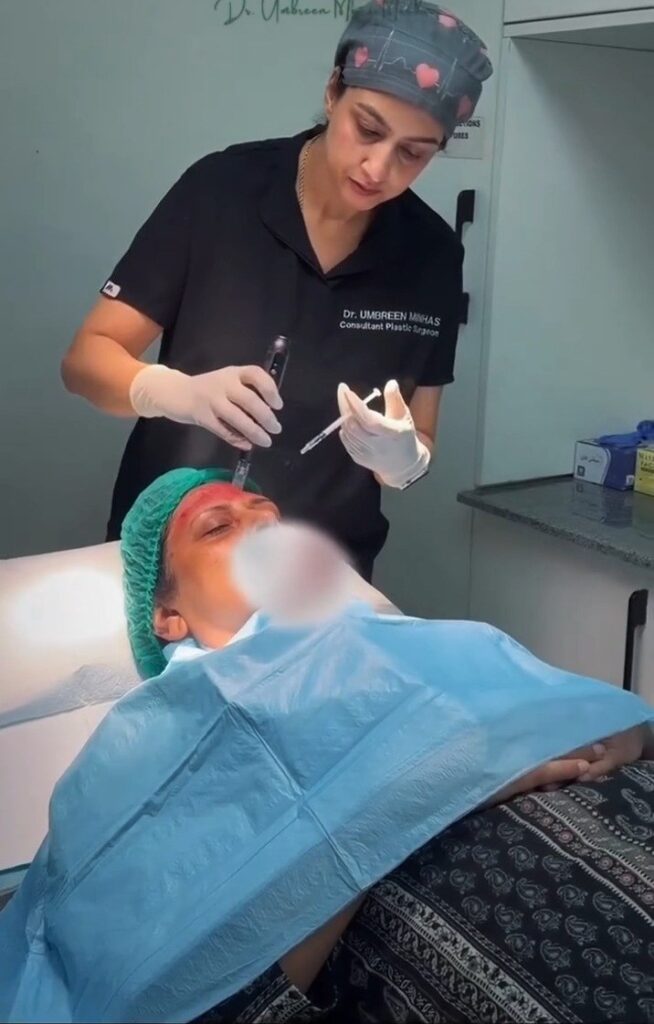
Broad, shallow acne scars respond well. Deep ice-pick scars often need other methods, compared here.
Fine crepey lines soften as collagen rebuilds. Deep folds from sagging need lifting rather than resurfacing.
Pores look smaller as the surface tightens. Results are modest, and oily skin may need ongoing skincare too.
Laser can soften a scar’s surface and colour. Wide or tight scars may need scar revision first.
Dr. Umbreen Munir Minhas checks your skin type, scar depth and any history of cold sores, keloids or dark marks after injury, as these change the plan.
Avoid sun tanning and stop retinoid creams before treatment. Darker skin may be prepared with a pigment-calming cream for some weeks first.
Numbing cream is applied and left to work. The laser is passed over the area in a grid, and you feel heat and prickling as each section is treated.
Your skin looks red and feels like sunburn. A healing ointment is applied, and you go home the same day with written aftercare instructions.
| Time After Treatment | What to Expect |
|---|---|
| Same day | Redness, heat and mild swelling. |
| 24 to 48 hours | Swelling peaks and the skin feels tight. |
| Days 5 to 8 | Tiny dotted scabs flake off. Skin looks pink. |
| Weeks 2 to 4 | Pinkness fades and makeup can cover it. |
| Months 3 to 6 | Texture keeps improving as collagen forms. |
Do not pick the scabs. Use the ointment as shown, then a gentle moisturiser and strict sun protection, because new skin burns and darkens easily.
In darker skin, the most common problem is temporary dark patches, called post-inflammatory hyperpigmentation. It may appear 3 to 4 weeks after treatment and usually clears within 4 to 6 months.
Treatment is delayed if you have active acne, a skin infection, a recent tan or have taken isotretinoin recently.
It does not lift sagging skin, remove deep folds or erase every scar. Melasma can worsen with heat, so it needs a different plan.
Your fee is confirmed after assessment, once the area and number of sessions are agreed. Ask for one written price for the full course.
| Factor | How It Affects Your Fee |
|---|---|
| Area | Full face costs more than cheeks only. |
| Depth | Deeper settings for scars take longer. |
| Sessions | Scars usually need a course of treatments. |
| Aftercare | Healing creams and sunscreen may be extra. |
A cheap session that leaves you with dark patches costs more in the end, so ask how darker skin is protected before and after.

Her public profile includes burns, scars and skin grafts, so she treats scarred skin as part of her daily work. She can also tell you when a scar needs surgery rather than laser.
Fully ablative CO2 removes the whole surface layer of the treated area in one pass, rather than tiny columns.
| Feature | Fractional CO2 | Fully Ablative CO2 |
|---|---|---|
| Skin treated | Tiny columns with gaps | The entire surface |
| Healing | Faster, as skin between dots is intact | Slower, with open raw skin |
| Sessions | Usually a course | Usually one |
| Suits darker skin? | Yes, with care | Rarely |
| Strength | Moderate per session | Strongest single result |
In studies of fully ablative CO2, redness lasted about 7 weeks on average and 8% of patients developed lasting lighter patches, which is why fractional is preferred for most Pakistani skin.
Dr. Umbreen Munir Minhas sees patients privately at Omer Diagnostic & Specialist Clinics (ODC), 12-A, LG Floor, CBC Plaza, G-8 Markaz, Islamabad, Monday to Saturday, 11:00 AM to 6:00 PM.
Bring a list of your skin creams and acne medicines, and plan sessions well ahead of any wedding or event.
Choose a doctor who assesses your skin type, prepares darker skin before treatment and sees you during healing. Ask how dark patches would be managed if they appear.
Numbing cream takes the edge off, but you feel heat and sharp prickling, strongest over bone. The skin feels like sunburn for a day or two afterwards.
Scar improvement usually lasts because the scar tissue has been remodelled. Wrinkle and texture gains last years, but your skin keeps ageing and sun exposure shortens them.
Many studies used 3 sessions spaced 4 to 6 weeks apart for acne scars. Fine lines and texture may need fewer. Dr. Umbreen Munir Minhas reviews your skin before each one.
Yes, with the right settings, skin preparation and sun care. Lower density, careful spacing between sessions and pigment-calming creams all reduce the chance of dark patches.
Cooler months with less sun are easier, as healing skin must be kept out of strong sunlight. Treatment in summer is possible with strict sun protection.
Patient guides on skin resurfacing from Dr. Umbreen Munir Minhas’s blog.
Downtime after a chemical peel ranges from almost none for a light peel to about 7 to 10 days for a medium peel. Deep peels need two weeks or more and are rarely used on brown skin.
A chemical peel is a skin treatment that applies an acid solution to remove damaged outer layers of skin in a controlled way. New, smoother and more even skin grows back in its place.
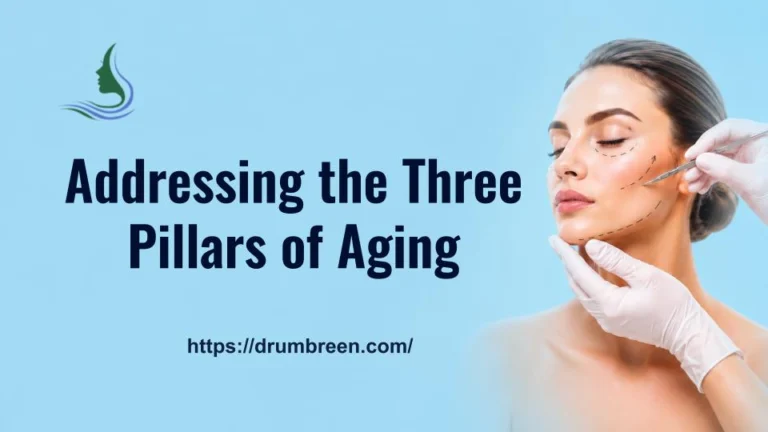
Facial aging is not just wrinkles. It happens in three layers at once: the face loses volume, the skin loses quality, and the support structure underneath shifts and loosens.