How Long Is Downtime After a Chemical Peel?
Downtime after a chemical peel ranges from almost none for a light peel to about 7 to 10 days for a medium peel. Deep peels need two weeks or more and are rarely used on brown skin.
Laser treatment in Islamabad with Dr. Umbreen Munir Minhas starts with your skin type and the exact concern, then matches it to the laser that targets that problem with the least risk to your skin.

Medically reviewed by Dr. Umbreen Munir Minhas, MBBS, FCPS (Plastic Surgery). Last updated October 2026.


 Trustindex verifies that the original source of the review is Google.
 Trustindex verifies that the original source of the review is Google.
 Trustindex verifies that the original source of the review is Google.
 Trustindex verifies that the original source of the review is Google.
 Trustindex verifies that the original source of the review is Google.
 Trustindex verifies that the original source of the review is Google.
 Trustindex verifies that the original source of the review is Google.
 Trustindex verifies that the original source of the review is Google.
 Trustindex verifies that the original source of the review is Google.
 Trustindex verifies that the original source of the review is Google.
Every laser emits one wavelength of light that is absorbed by a chosen target, called a chromophore. Melanin in hair, water in skin and ink in a tattoo each need a different wavelength.
Because the target is heated while nearby tissue is spared, one machine cannot treat everything. The right device depends on what you want to change.
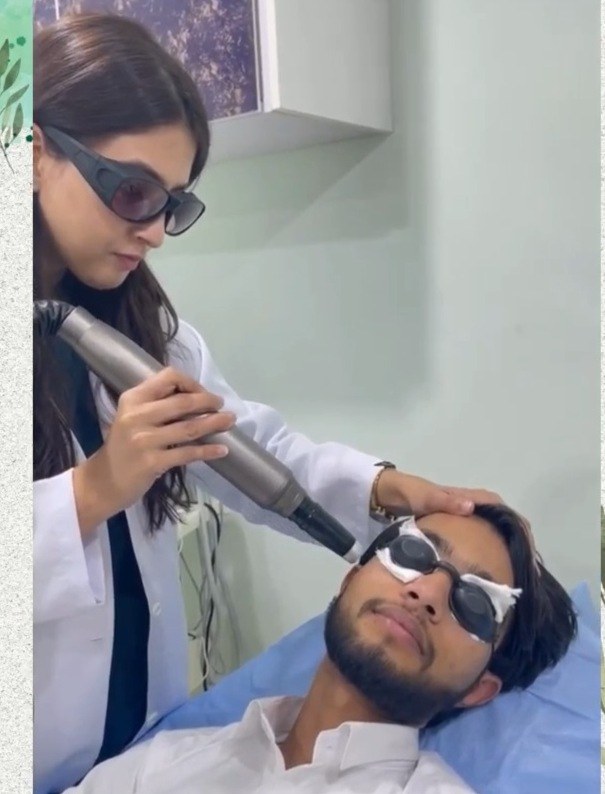
Coarse dark hair on the face or body keeps returning after waxing and threading. Lasers aimed at hair pigment reduce growth over a course.
Acne scars, sun damage and enlarged pores change the skin surface. Resurfacing lasers remove damaged tissue so smoother skin can form.
Freckles, sun spots and dark marks sit in the upper skin. Some respond to pigment lasers, but each needs a correct diagnosis first.
Professional, amateur and cosmetic tattoos can be faded by shattering the ink into particles your body clears over time.
Reduces unwanted hair over a course, with settings chosen for brown skin. Read about laser hair removal
Resurfaces acne scars, fine wrinkles and rough texture in tiny columns. Read about CO2 laser
Breaks tattoo ink into fragments that fade over a course of sessions. Read about tattoo removal
Lightens freckles and sun spots once they are confirmed harmless. Read about freckle removal
Melasma can worsen with heat, so laser is never the automatic first step. Read about melasma
Compares laser with other methods for each type of pitted acne scar. Read about acne scars
Most lasers work gradually over a course, and results depend on your skin type, the concern and aftercare with sun protection. Photos below are shared with patient consent.

| Your Concern | Suggested Treatment | Sessions Usually Needed |
|---|---|---|
| Dark hair on face or body | Laser hair removal | About 6 |
| Acne scars, wrinkles, rough texture | CO2 laser | Often 3 |
| Unwanted tattoo | Tattoo removal | Often 7 to 10 |
| Freckles and sun spots | Freckle removal | Decided after assessment |
| Brown patches on cheeks | Melasma treatment | Medical treatment first |
Dr. Umbreen Munir Minhas grades your skin tone and how easily it tans or darkens, as this decides the wavelength and energy that are safe for you.
She asks about acne tablets, sun-sensitising medicines, recent tanning and cold sores, because each can change timing or settings.
For darker skin or a new laser, a small hidden area is treated first and checked before the full area is planned.
Each laser page lists its own risks and published rates. Across lasers, the most common problem in brown skin is temporary darkening. Dr. Umbreen Munir Minhas explains these before you start:
Lasers cannot lift sagging skin, remove deep folds or change your natural skin colour. Loose skin needs non-surgical tightening or surgery.
Each fee is confirmed after assessment, once the laser, area and number of sessions are agreed. Ask for one written price for the full course.
| Factor | How It Affects Your Fee |
|---|---|
| Laser type | Resurfacing lasers cost more per session than hair removal. |
| Area size | Small areas cost less than full face or body. |
| Sessions | Course packages usually cost less per visit. |
| Aftercare | Sunscreen and healing creams may be extra. |
Any laser clinic Islamabad patients visit should name the laser type and explain why it suits their skin tone before quoting a price.
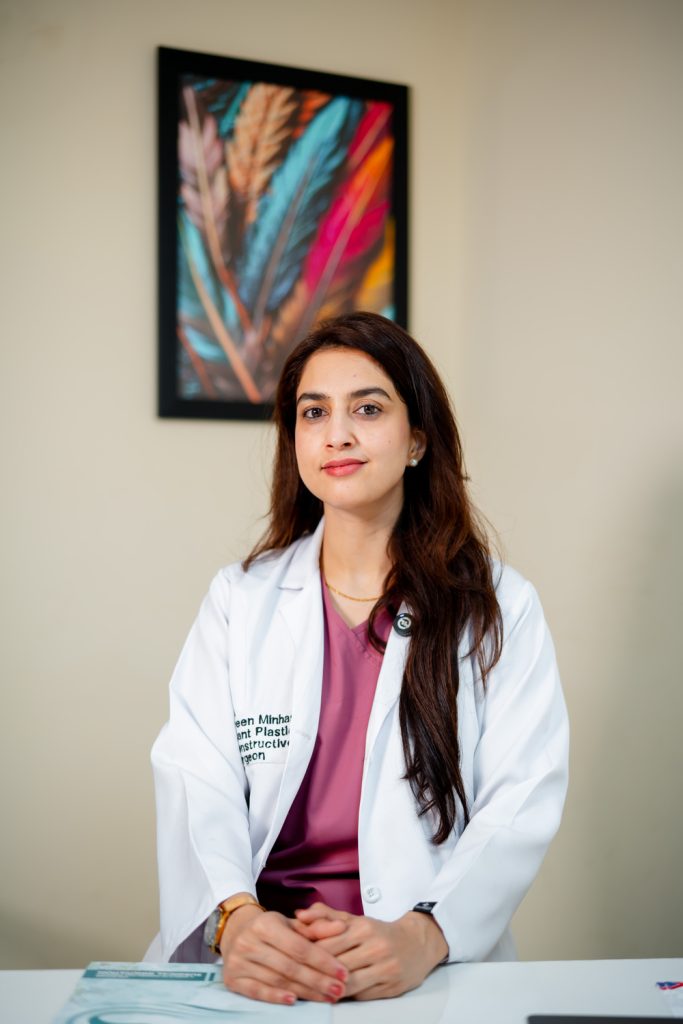
Laser hair removal is among her listed services, and her work with burns, scars and skin grafts gives her close knowledge of how skin heals. Women can discuss body and facial concerns with a female doctor.
Ablative lasers remove the outer skin so it regrows, while non-ablative lasers heat deeper skin and leave the surface intact.
| Feature | Ablative | Non-Ablative |
|---|---|---|
| Skin surface | Removed and regrown | Left intact |
| Social downtime | About 7 to 10 days | Hours to 2 days |
| Sessions | Usually 1 to 3 | Usually 4 to 6 |
| Suited to | Established scars, deeper lines | Fine lines, early sun damage |
| Risk in darker skin | Higher | Lower |
Fractional versions of ablative lasers treat the skin in tiny dots, which shortens healing and makes them easier to use on brown skin.
Dr. Umbreen Munir Minhas sees patients privately at Omer Diagnostic & Specialist Clinics (ODC), 12-A, LG Floor, CBC Plaza, G-8 Markaz, Islamabad, Monday to Saturday, 11:00 AM to 6:00 PM.
Bring a list of your medicines and skin creams, and avoid sun tanning in the weeks before your visit.
Choose a doctor-led clinic with more than one laser type, so the device fits your concern rather than the other way round. Ask who manages side effects if they happen.
Yes, when the wavelength and energy suit your skin type. Longer wavelengths, test patches and strict sun care keep the risk of dark patches low.
It depends on the laser. Hair removal feels like quick snaps, while resurfacing feels hotter and sharper. Numbing cream and cooling keep most treatments comfortable.
Most cosmetic lasers are postponed until after pregnancy and breastfeeding. Pregnancy hormones also make pigment marks darker, so laser results are much less predictable during that time.
Hair reduction and scar remodelling are long lasting, and removed ink does not return. Sun damage and ageing continue, so skin results need protection to last.
No. Cosmetic lasers use non-ionising light that does not damage DNA the way ultraviolet sunlight does. A suspicious mole should still be checked before any laser is used near it.
Patient guides on laser and skin treatments from Dr. Umbreen Munir Minhas’s blog.
Downtime after a chemical peel ranges from almost none for a light peel to about 7 to 10 days for a medium peel. Deep peels need two weeks or more and are rarely used on brown skin.
Most professional tattoos need about 7 to 10 laser sessions to fade fully, spaced about 7 to 8 weeks apart. That means most removals take a year or more.
Laser hair removal uses concentrated light to heat and damage hair follicles so they grow back much less, finer and lighter. It gives long-term hair reduction rather than guaranteed permanent removal.