Laser Hair Removal vs Waxing: Which Is Better?
Waxing pulls hair out by the root, so it grows back in about three to six weeks. Laser hair removal damages the follicle itself, so after a full course most hair stays away for months to years.
Laser hair removal in Islamabad with Dr. Umbreen Munir Minhas reduces unwanted hair on the face and body by heating the hair root, with settings chosen for your skin tone and hair colour.

Medically reviewed by Dr. Umbreen Munir Minhas, MBBS, FCPS (Plastic Surgery). Last updated October 2026.


 Trustindex verifies that the original source of the review is Google.
 Trustindex verifies that the original source of the review is Google.
 Trustindex verifies that the original source of the review is Google.
 Trustindex verifies that the original source of the review is Google.
 Trustindex verifies that the original source of the review is Google.
 Trustindex verifies that the original source of the review is Google.
 Trustindex verifies that the original source of the review is Google.
 Trustindex verifies that the original source of the review is Google.
 Trustindex verifies that the original source of the review is Google.
 Trustindex verifies that the original source of the review is Google.
A laser beam passes through the skin and is absorbed by melanin, the dark pigment in the hair. The heat travels down the hair shaft and damages the follicle so it grows back finer and slower, or not at all.
Hair removal is one of the 5 most common non-surgical cosmetic procedures worldwide, according to the ISAPS 2024 global survey.
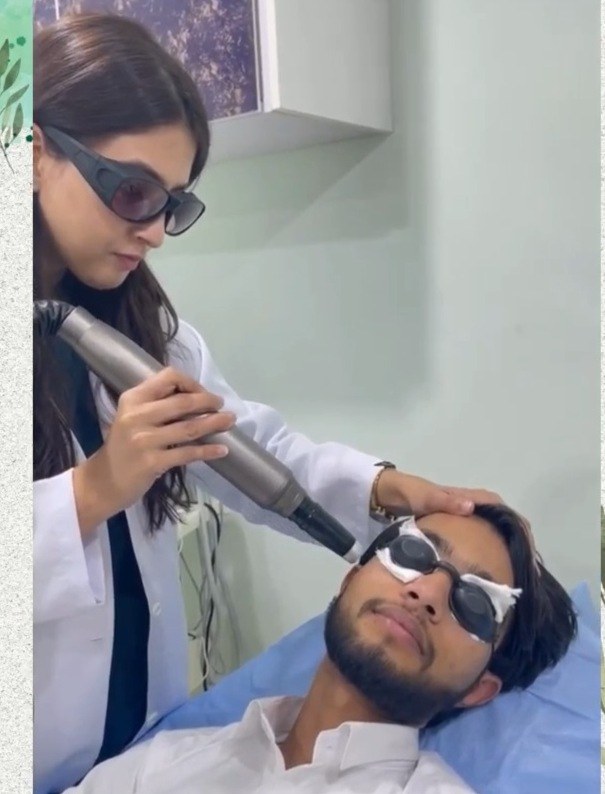
Coarse hair on the chin, upper lip or sides of the face often has a hormonal cause. In a Rawalpindi study, PCOS caused 57.7% of excess hair in women.
Shaving and waxing can leave painful ingrown hairs and dark marks, especially on the beard line, bikini area and underarms. Laser reduces both.
Dark hair on the arms, legs, back or chest can be hard to manage. Laser thins it out so regrowth is softer and much slower.
Threading and waxing every few weeks costs time and hurts each time. A laser course replaces most of those sessions over the long run.
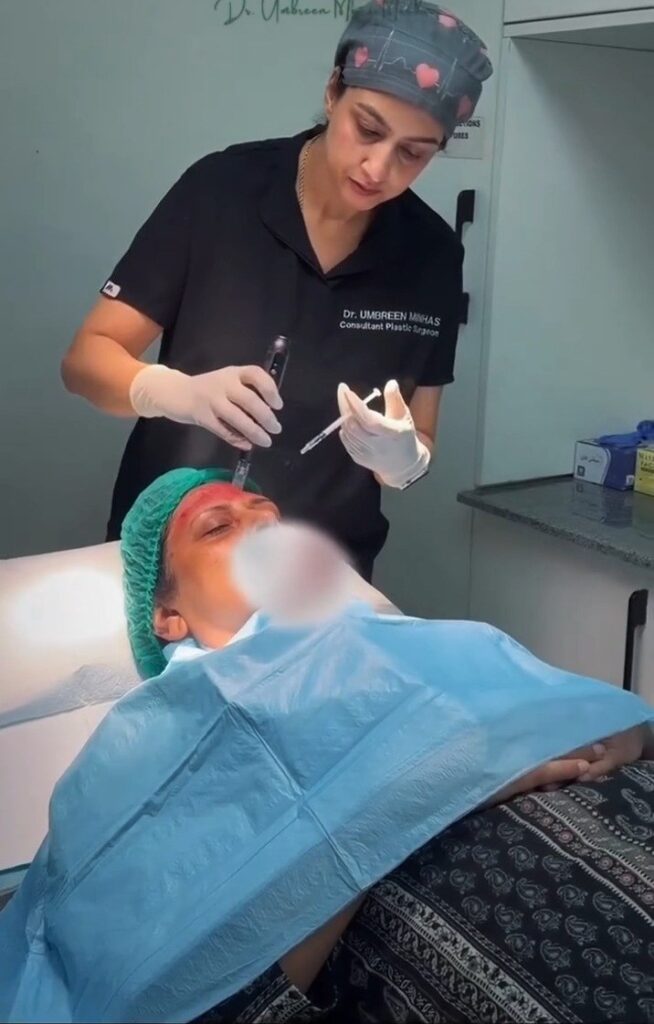
Upper lip, chin, cheeks and jawline in women, and the beard line or cheeks in men. Short sessions with careful settings.
Small areas with coarse hair respond quickly. Laser also eases the ingrown hairs and dark patches that shaving leaves.
Larger areas take longer each visit. Men often treat the back, shoulders and chest, while women often treat arms and legs.
A full body laser plan covers several areas in one visit. A female doctor offers privacy for women treating intimate areas.
Dr. Umbreen Munir Minhas checks your skin type, hair colour and any hormonal signs such as irregular periods. A small test patch may be done first on darker skin.
Shave the area a day before, but do not wax, thread or pluck in the weeks before, as the laser needs the root in place. Avoid sun tanning beforehand.
Cooling gel or a chilled tip protects the skin while the laser passes over the area in rows. You and the operator wear protective eye shields.
The skin may look pink with small bumps around each hair. You can return to work straight away and apply a soothing cream if needed.
| Time After Treatment | What to Expect |
|---|---|
| Same day | Redness and raised bumps around follicles. |
| 24 to 48 hours | Redness settles. Skin may feel warm like mild sunburn. |
| Week 1 | Treated hairs start to fall out. |
| Weeks 2 to 4 | Skin looks smoother before the next growth cycle. |
| Long term | Regrowth is finer and patchier after each session. |
Use sunscreen on treated skin, and avoid hot baths, saunas and the gym for the first day. Shaving between sessions is fine.
In one study of 300 patients, 25.3% had short-term redness, blistering or pain, and 9.3% had longer-lasting effects.
Darker skin needs the right wavelength. Pigment changes reach 19% with shorter-wavelength lasers but only 2 to 3% with Nd:YAG.
It cannot remove white, grey, blonde or red hair, which has little pigment. Hormonal causes keep producing new hair, so they need medical treatment too.
Your fee is confirmed after assessment, once the areas and number of sessions are agreed. Ask for one written price for the whole course.
| Factor | How It Affects Your Fee |
|---|---|
| Area size | Upper lip costs far less than legs or back. |
| Number of areas | Packages for several areas often cost less per area. |
| Sessions | Course prices differ from single sessions. |
| Maintenance | Occasional maintenance visits add to the long-term cost. |
Compare prices by the full course, not one session, and ask which laser type will be used for your skin tone.

Laser hair removal is listed among her public services. As a doctor, she looks for hormonal causes of excess hair, and women can be treated in privacy by a female doctor.
Waxing and threading pull hair out from the root, so it grows back in a few weeks.
| Feature | Laser Hair Removal | Waxing and Threading |
|---|---|---|
| How it works | Damages the follicle | Pulls the hair out |
| Regrowth | Finer and much slower | Full regrowth in weeks |
| Ingrown hairs | Reduced | Common |
| Cost pattern | Higher upfront | Lower but lifelong |
| Works on light hair? | No | Yes |
Over several years, a laser course often costs less than repeated waxing, and it spares the skin from constant pulling.
Dr. Umbreen Munir Minhas sees patients privately at Omer Diagnostic & Specialist Clinics (ODC), 12-A, LG Floor, CBC Plaza, G-8 Markaz, Islamabad, Monday to Saturday, 11:00 AM to 6:00 PM.
Tell her about any medicines that make skin sun-sensitive, recent tanning and any hormone tests you have had.
Choose a doctor-led clinic that checks your skin type, uses a wavelength suited to darker skin and does a test patch. Avoid offers that promise all hair gone in one session.
Each pulse feels like a rubber band snapping on the skin. Cooling makes it bearable, and the upper lip and bikini area are usually the most sensitive.
It gives long-term reduction rather than removal of every hair. Most treated follicles stop growing, but hormones can wake others, so an occasional maintenance session may be needed.
Most people need about 6 sessions, spaced 4 to 6 weeks apart, because hair grows in cycles and only actively growing hair responds to each session.
No. IPL uses a broad flash of light rather than one wavelength. It can work on fair skin with dark hair but is less suited to darker skin tones.
Yes, if you avoid tanning and protect treated skin with sunscreen. Recently tanned skin absorbs more energy and burns more easily, so sessions may be postponed.
Patient guides on laser hair removal from Dr. Umbreen Munir Minhas’s blog.
Waxing pulls hair out by the root, so it grows back in about three to six weeks. Laser hair removal damages the follicle itself, so after a full course most hair stays away for months to years.
Most people need about six laser hair removal sessions, spaced four to six weeks apart, for a strong and lasting reduction. Many clinics quote a range of five to eight.
Laser hair removal uses concentrated light to heat and damage hair follicles so they grow back much less, finer and lighter. It gives long-term hair reduction rather than guaranteed permanent removal.