
What Are Chemical Peels and What Do They Treat?
A chemical peel is a skin treatment that applies an acid solution to remove damaged outer layers of skin in a controlled way. New, smoother and more even skin grows back in its place.
Pigmentation treatment in Islamabad with Dr. Umbreen Munir Minhas finds what is causing your dark marks, then fades them with creams, peels or laser, so your own natural skin tone looks clear and even.

Medically reviewed by Dr. Umbreen Munir Minhas, MBBS, FCPS (Plastic Surgery). Last updated October 2026.


 Trustindex verifies that the original source of the review is Google.
 Trustindex verifies that the original source of the review is Google.
 Trustindex verifies that the original source of the review is Google.
 Trustindex verifies that the original source of the review is Google.
 Trustindex verifies that the original source of the review is Google.
 Trustindex verifies that the original source of the review is Google.
 Trustindex verifies that the original source of the review is Google.
 Trustindex verifies that the original source of the review is Google.
 Trustindex verifies that the original source of the review is Google.
 Trustindex verifies that the original source of the review is Google.
Hyperpigmentation means patches of skin darker than the surrounding skin, caused by extra melanin. Treatment slows that pigment and helps the darker cells shed.
If you searched for a skin whitening treatment in Islamabad, note that the aim here is to treat dark marks, not to change your natural complexion.
Healed spots leave flat brown marks, called post-inflammatory hyperpigmentation. A review found them in 47.4% of Asian patients with acne.
Years of strong sun leave flat brown sun spots on the cheeks, hands and arms, and deepen an uneven tone on exposed skin.
Pregnancy, pills and thyroid problems can darken the face. Dark, velvety skin on the neck or underarms can signal insulin resistance.
Harsh scrubs, waxing, perfumes and unlabelled whitening creams can inflame skin and leave darker patches behind.
Flat brown or purple spots where pimples healed. They fade with creams and peels once acne is controlled.
Flat, defined brown spots on sun-exposed skin. They often respond well to targeted peels or a pigment laser.
Symmetrical patches on both cheeks. It needs its own careful plan, explained here.
Thick, velvety darkening in skin folds. Blood sugar and weight checks come first, then skin care.
Dr. Umbreen Munir Minhas identifies the type and depth of pigment, and checks that no spot is a changing mole or growth that needs medical assessment first.
Acne is treated, harsh products are stopped and a daily sunscreen is chosen. Blood tests may be advised for darkening in skin folds.
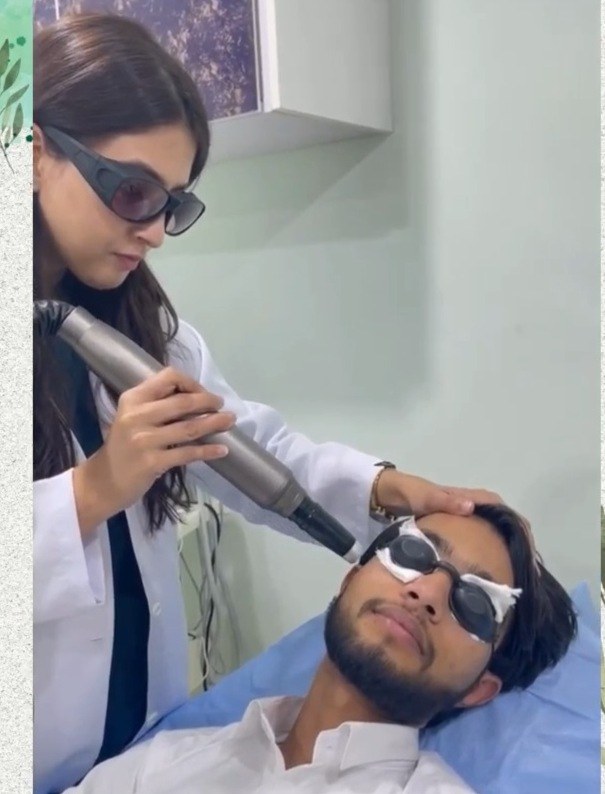
Prescription creams start first. Superficial peels or laser sessions are added for stubborn spots once the skin is calm.
After marks fade, a simple routine of sunscreen and a mild cream keeps tone even. Reviews are planned before summer.
| Time After Starting | What to Expect |
|---|---|
| Weeks 1 to 2 | Mild dryness while skin adjusts to creams. |
| Weeks 4 to 6 | Acne marks begin to look lighter. |
| Months 2 to 3 | Clear fading of surface pigment. |
| After each peel | Light flaking for a few days. |
| Long term | Even tone holds with daily sun care. |
Do not pick spots or scrub dark patches, as friction makes pigment worse. Reapply sunscreen when outdoors.
Brown skin reacts to irritation by making more pigment, so treatments that are too strong can leave new dark marks. Each step is introduced slowly and reviewed.
It does not change your natural skin colour, and it should not try to. Deep pigment and birthmarks respond slowly or need other methods.
Your fee is confirmed after assessment, once the cause and plan are clear. Ask for one written estimate covering visits, creams and procedures.
| Factor | How It Affects Your Fee |
|---|---|
| Cause | Acne marks often need less than sun damage. |
| Creams | Prescription creams are an ongoing cost. |
| Procedures | Each peel or laser session adds to the total. |
| Tests | Blood tests, if needed, are separate. |
A good uneven skin tone treatment plan spends money on the cause and sunscreen first, not on expensive drips or packages.

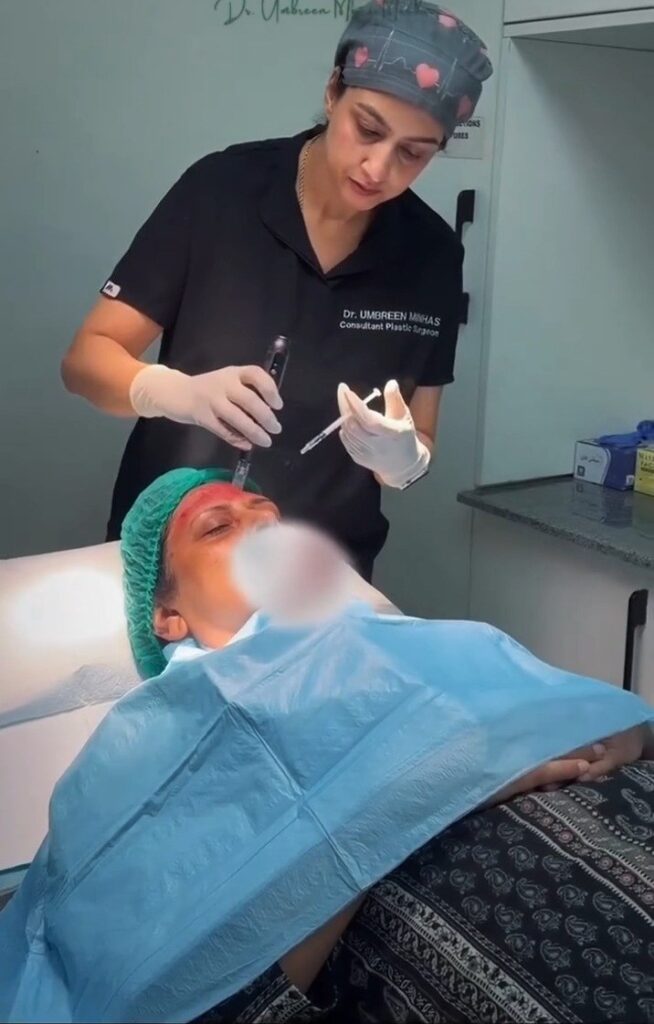
Skin peeling is among her listed services, and she treats dark marks as a skin concern with a cause, not as a complexion to be changed. Women can discuss their skin privately with a female doctor.
Glutathione drips and injections are sold in salons and clinics as whole-body skin whitening.
| Feature | Assessed Pigmentation Care | Glutathione Injections |
|---|---|---|
| Aim | Fade specific dark marks | Lighten whole complexion |
| Finds the cause? | Yes | No |
| Evidence | Established creams and peels | No approved product |
| Reported harms | Mostly mild irritation | Liver, kidney and severe skin reactions |
| Infection risk | Low | Unsterile drips can spread hepatitis |
The United States Food and Drug Administration has warned that injectable skin lighteners may be unsafe and ineffective, and none has been approved.
Dr. Umbreen Munir Minhas sees patients privately at Omer Diagnostic & Specialist Clinics (ODC), 12-A, LG Floor, CBC Plaza, G-8 Markaz, Islamabad, Monday to Saturday, 11:00 AM to 6:00 PM.
Bring every cream and soap you use on the dark areas, and any recent blood test reports.
Choose a doctor who diagnoses the type of pigment, treats the cause and starts gently on brown skin. Avoid clinics selling whitening drips or unlabelled creams.
Creams may sting briefly in the first week. Peels tingle or feel warm for a few minutes, and pigment lasers feel like quick snaps eased by cooling.
Faded acne marks rarely return unless new breakouts appear. Sun spots and hormonal pigment can come back, so daily sunscreen is the most important long-term step.
Most active creams, peels and lasers are delayed until after pregnancy and breastfeeding. A gentle mineral sunscreen and a mild moisturiser are safe to use meanwhile.
Yes. Friction, shaving and insulin resistance are common causes, so these are checked first. Gentle creams and light peels then lighten the area over several months.
They can help a little as part of a routine, especially with sunscreen. They work slowly and do not replace prescription treatment for stubborn marks.
Patient guides on pigmentation and skin care from Dr. Umbreen Munir Minhas’s blog.
A chemical peel is a skin treatment that applies an acid solution to remove damaged outer layers of skin in a controlled way. New, smoother and more even skin grows back in its place.

Some skin whitening treatments are safe when used correctly for pigmentation, such as prescribed creams, gentle peels and carefully chosen lasers. Others carry real dangers, especially unlabelled “formula” creams and whitening…

“Skin whitening” is a popular term in Pakistan, but no safe treatment can change the natural colour you were born with. What medical treatments can do is fade extra pigment, such as dark patches, acne marks, tanning and uneven…