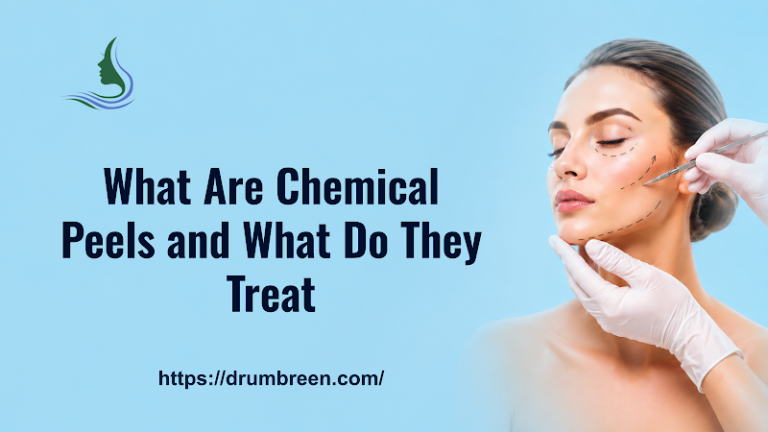
What Are Chemical Peels and What Do They Treat?
A chemical peel is a skin treatment that applies an acid solution to remove damaged outer layers of skin in a controlled way. New, smoother and more even skin grows back in its place.
Melasma treatment in Islamabad with Dr. Umbreen Munir Minhas controls the brown patches on your cheeks, forehead and upper lip with sun protection, creams and gentle procedures, planned to avoid making them darker.

Medically reviewed by Dr. Umbreen Munir Minhas, MBBS, FCPS (Plastic Surgery). Last updated October 2026.


 Trustindex verifies that the original source of the review is Google.
 Trustindex verifies that the original source of the review is Google.
 Trustindex verifies that the original source of the review is Google.
 Trustindex verifies that the original source of the review is Google.
 Trustindex verifies that the original source of the review is Google.
 Trustindex verifies that the original source of the review is Google.
 Trustindex verifies that the original source of the review is Google.
 Trustindex verifies that the original source of the review is Google.
 Trustindex verifies that the original source of the review is Google.
 Trustindex verifies that the original source of the review is Google.
Melasma, often called chhaiyan, is a long-term skin condition that causes symmetrical brown or grey-brown patches, mostly on the cheeks, forehead, nose and upper lip. Pigment cells become overactive.
It is common in Pakistan. At one Gujranwala skin clinic, 3.1% of all patients seen had melasma, most of them women in their reproductive years.
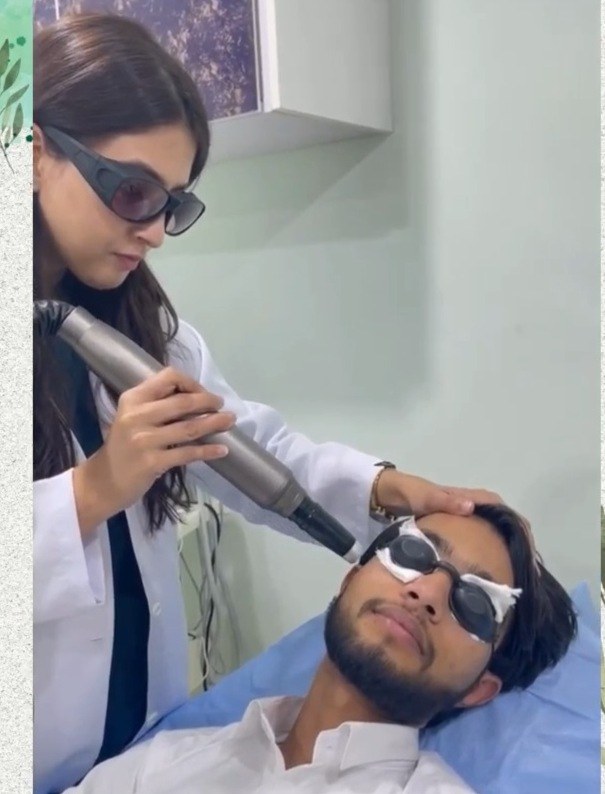
Sun exposure is the most common trigger. Visible light and heat from cooking or hot weather can darken patches even without sunburn.
Pregnancy and contraceptive pills often start or worsen melasma. It is rare before puberty and after menopause, which points to a hormonal link.
Melasma often runs in families. Brown skin types are more prone because pigment cells react more strongly to triggers.
Unlabelled whitening creams with strong steroids can thin skin and make melasma rebound darker once they are stopped.
A tinted broad-spectrum sunscreen blocks UV and visible light. Without it, no other treatment holds its result.
Creams that slow pigment production are the first step, used for set periods under medical review.
Given as tablets or in creams in suitable patients, after checking for clotting risk and medical history.
Light superficial peels speed shedding of pigmented cells once the skin is primed and calm.
Dr. Umbreen Munir Minhas examines the pattern and depth of pigment, and rules out look-alikes such as sun spots, freckles or marks left by acne or creams.
She asks about pregnancy plans, pills, thyroid problems, sun and heat exposure, and any whitening creams, as each changes the plan.
Sunscreen and prescription creams start first. Peels or other procedures are added only when the skin is calm and patches are stable.
Once patches fade, a lighter routine keeps them controlled. Regular reviews catch early darkening, especially before summer.
| Time After Starting | What to Expect |
|---|---|
| Weeks 1 to 2 | Mild dryness or stinging from creams. |
| Weeks 4 to 8 | Patches begin to look lighter at the edges. |
| Months 2 to 3 | Clear lightening if sun protection is strict. |
| Month 3 onwards | Peels may be added for further fading. |
| Long term | Maintenance creams and sunscreen continue. |
Reapply sunscreen every few hours outdoors, wear a wide-brimmed hat, and avoid steam rooms and long exposure to stove heat.
The main risk is making melasma darker with treatments that are too strong. Heat and irritation trigger pigment cells, so every step is introduced slowly.
No treatment cures melasma for good. Deeper dermal pigment responds slowly, and pregnancy or strong sun can bring patches back.
Your fee is confirmed after assessment, once the plan is clear. Ask for one written estimate covering visits, creams and any peels.
| Factor | How It Affects Your Fee |
|---|---|
| Creams and sunscreen | Ongoing monthly cost at home. |
| Peels | Each session adds to the total. |
| Review visits | Regular checks are part of the plan. |
| Severity | Deeper pigment needs a longer plan. |
Avoid packages that promise to remove melasma in a fixed number of sessions, as no honest plan can promise that.
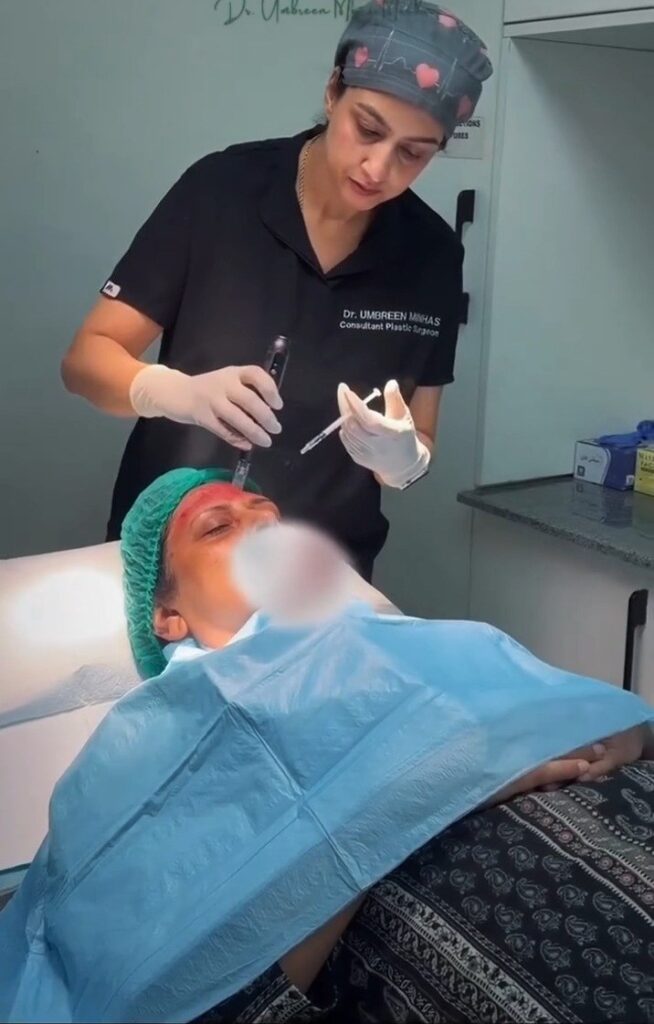
Skin peeling is among her listed services, and she plans treatment around your triggers rather than selling a quick fix. Women can discuss hormones, pregnancy plans and skin privately with a female doctor.
Laser toning passes a low-energy laser over the face repeatedly to break up pigment.
| Feature | Medical Plan | Laser Toning |
|---|---|---|
| First step? | Yes | No, only for resistant cases |
| Heat to skin | None | Low but repeated |
| Risk of white spots | None | Possible with many sessions |
| Relapse after stopping | Common without sunscreen | Common |
| Cost | Lower | Higher |
Studies show laser works better when combined with oral tranexamic acid than either alone, which is why laser is used as an add-on, never on its own.
Dr. Umbreen Munir Minhas sees patients privately at Omer Diagnostic & Specialist Clinics (ODC), 12-A, LG Floor, CBC Plaza, G-8 Markaz, Islamabad, Monday to Saturday, 11:00 AM to 6:00 PM.
Bring every cream you have used on your face, including any bought from a beauty shop, and come without makeup.
Choose a doctor who finds your triggers, starts with sunscreen and creams, and is honest that melasma is controlled rather than cured. Avoid quick-fix laser packages.
It can be in selected, resistant cases at low settings with tablets or creams alongside. Aggressive or repeated laser can darken melasma or leave white spots.
Creams may sting or feel dry for the first weeks. Light peels tingle for a few minutes. None of the usual steps need numbing or time off work.
Melasma that starts in pregnancy often fades over the following months, but not always. If the patches stay, active treatment can safely start once breastfeeding ends.
No. Unlabelled creams often contain steroids or mercury that damage skin and cause rebound darkening. Only prescribed creams with known, listed ingredients are safe to use.
Yes, though it is less common. Men who work outdoors or near heat are more affected, and the plan follows the same steps of sun care and creams.
Patient guides on pigmentation and skin care from Dr. Umbreen Munir Minhas’s blog.
A chemical peel is a skin treatment that applies an acid solution to remove damaged outer layers of skin in a controlled way. New, smoother and more even skin grows back in its place.
Some skin whitening treatments are safe when used correctly for pigmentation, such as prescribed creams, gentle peels and carefully chosen lasers. Others carry real dangers, especially unlabelled “formula” creams and whitening…

“Skin whitening” is a popular term in Pakistan, but no safe treatment can change the natural colour you were born with. What medical treatments can do is fade extra pigment, such as dark patches, acne marks, tanning and uneven…