
How Many Sessions Does Tattoo Removal Need?
Most professional tattoos need about 7 to 10 laser sessions to fade fully, spaced about 7 to 8 weeks apart. That means most removals take a year or more.
Mole removal in Islamabad with Dr. Umbreen Munir Minhas starts with checking each mole for warning signs, then removing it with the method that leaves the neatest scar and allows laboratory testing when needed.

Medically reviewed by Dr. Umbreen Munir Minhas, MBBS, FCPS (Plastic Surgery). Last updated October 2026.


 Trustindex verifies that the original source of the review is Google.
 Trustindex verifies that the original source of the review is Google.
 Trustindex verifies that the original source of the review is Google.
 Trustindex verifies that the original source of the review is Google.
 Trustindex verifies that the original source of the review is Google.
 Trustindex verifies that the original source of the review is Google.
 Trustindex verifies that the original source of the review is Google.
 Trustindex verifies that the original source of the review is Google.
 Trustindex verifies that the original source of the review is Google.
 Trustindex verifies that the original source of the review is Google.
A mole, medically called a melanocytic naevus, is a cluster of pigment cells. Most are harmless, flat or raised, and brown, black or skin coloured.
Any mole that is new in adulthood or changing needs medical assessment, and may need to be sent to a laboratory for testing, called histopathology, before anything cosmetic is done.
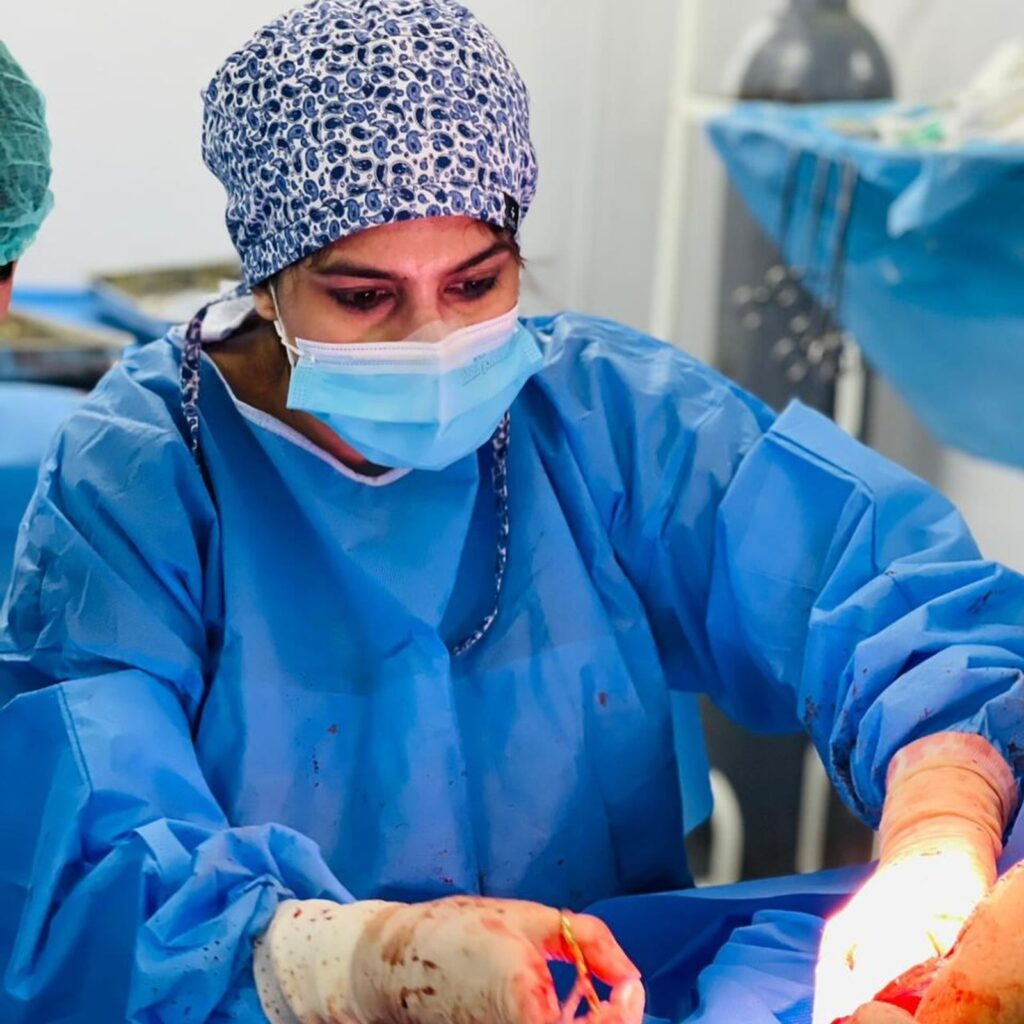
Doctors check the ABCDE signs: asymmetry, border, colour, diameter over 6 mm and evolving. Change matters most.
Raised moles on the neck, beard line, bra line or waist can bleed and get sore when they are rubbed or cut while shaving.
A large or dark mole on the face can draw attention. Removing it with a fine, well-placed scar can make the face look clearer.
Some people want a mole they worry about removed and tested in a laboratory, so they know for certain that it is harmless.
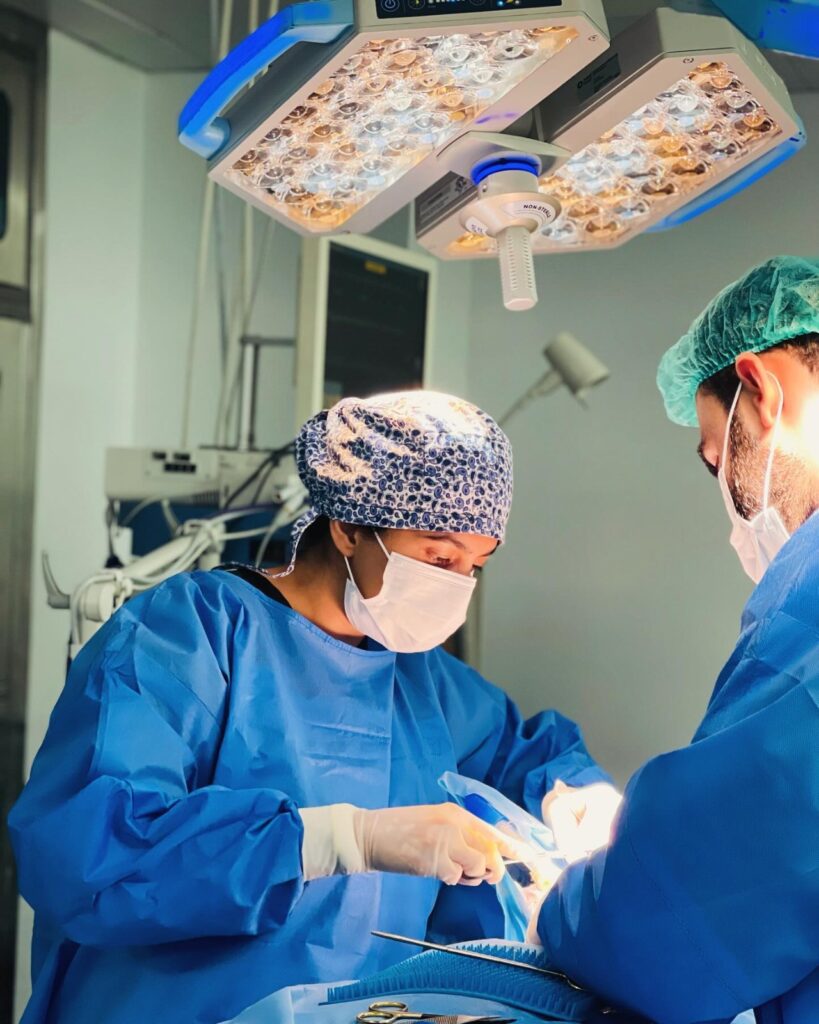
A raised mole is shaved flush with the skin under local anesthetic. No stitches, and the tissue can be tested.
The whole mole is cut out with a small margin and stitched. It suits flat, deep or suspicious moles.
A small round blade removes a tiny mole in one piece. One or two stitches close the small wound neatly.
Reserved for small, clearly harmless flat spots only, because laser destroys tissue that cannot then be tested.
Every method leaves a mark. A shaved mole usually leaves a flat, pale spot, and an excision leaves a fine line that fades over months. Photos below are shared with patient consent.
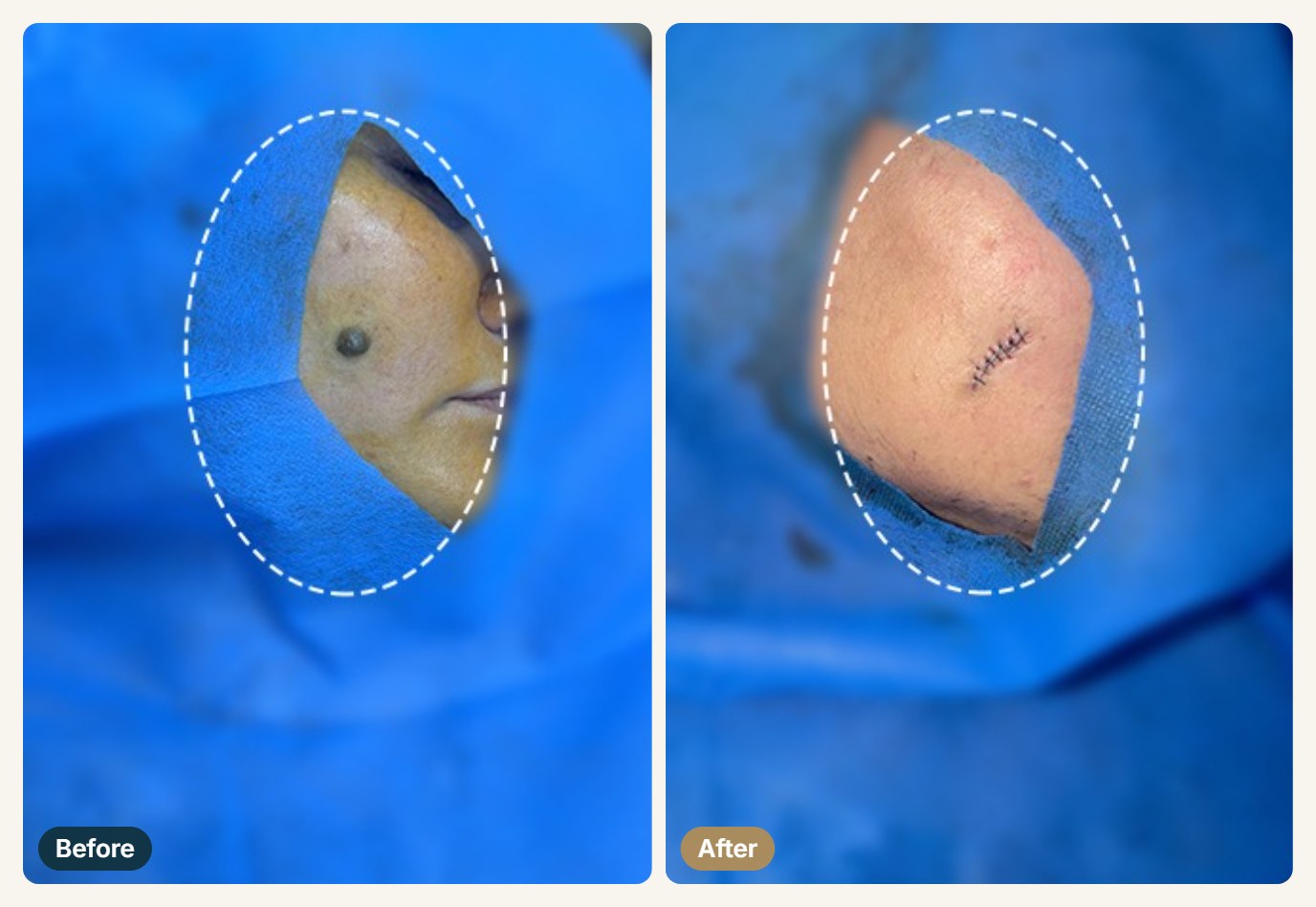
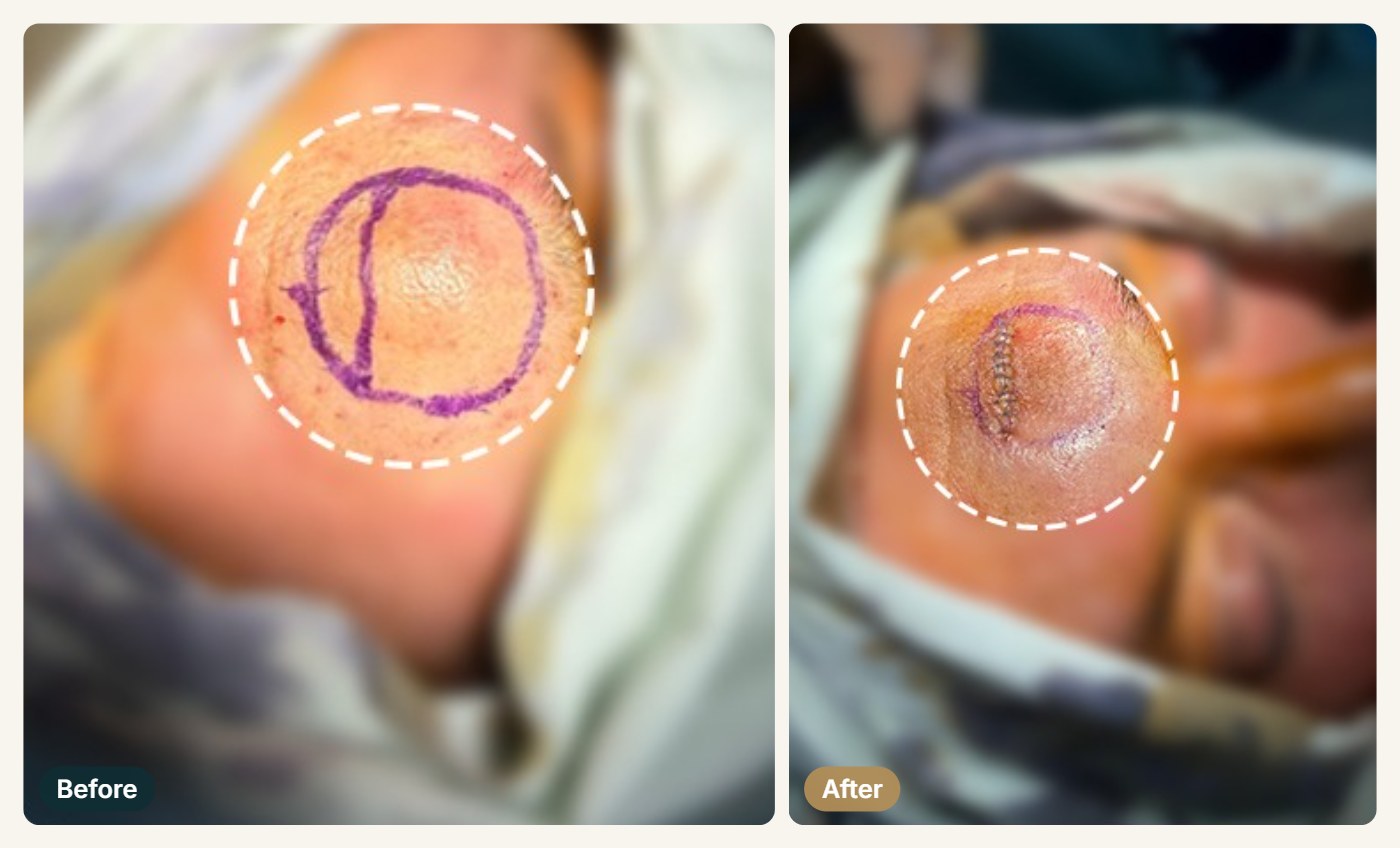

Dr. Umbreen Munir Minhas looks at the mole closely, asks how long you have had it and whether it has changed, and checks your other moles for comparison.
Tell the clinic about blood thinners. Eat normally, and avoid applying creams or makeup over the mole on the day of the procedure.
The area is numbed with a small local injection. The mole is shaved or cut out, and bleeding is controlled before a dressing or fine stitches are placed.
Removed tissue is sent for testing when needed. You go home straight away, and the report is discussed at your follow-up visit.
| Time After Removal | What to Expect |
|---|---|
| Same day | Numbness wears off and the area feels tender. |
| 24 to 48 hours | Keep the dressing dry and clean. |
| Week 1 | A shaved site crusts over. Stitches come out on the face. |
| Weeks 2 to 4 | The wound has closed. The mark looks pink. |
| Long term | The scar softens and fades over months. |
Clean the wound gently as shown, keep it covered from sun, and use silicone gel on stitched scars once healed.
Complications are uncommon. The trade-off is between scar and completeness: shaved moles return in about 11 to 30% of cases, while full excision recurs in under 1%.
Some scarring is unavoidable. An excision scar is usually about 3 times longer than the mole, because a straight line heals flatter than a circle.
Your fee is confirmed after examination, once the method is agreed. Ask for one written price that includes any laboratory testing.
| Factor | How It Affects Your Fee |
|---|---|
| Method | Shave removal costs less than excision. |
| Number of moles | Removing several at once lowers the cost each. |
| Location | Face and delicate areas need finer closure. |
| Laboratory test | Histopathology is charged by the lab. |
When comparing mole removal cost in Pakistan, avoid offers that burn moles off without testing, as a missed skin cancer costs far more.

As a plastic surgeon whose profile includes head and neck cancer reconstruction, she removes moles with fine closure techniques and sends tissue for testing when it is needed.
Shave removal slices a raised mole level with the skin, while excision removes it fully, including its deeper root.
| Feature | Shave Removal | Surgical Excision |
|---|---|---|
| Suited to | Raised, harmless-looking moles | Flat, deep or worrying moles |
| Stitches | None | Yes |
| Scar | Small flat spot | Fine straight line |
| Can be tested? | Yes | Yes, more completely |
| Chance of return | Higher | Very low |
For any mole with warning signs, full excision is preferred so the laboratory can examine the whole lesion and its edges.
Dr. Umbreen Munir Minhas sees patients privately at Omer Diagnostic & Specialist Clinics (ODC), 12-A, LG Floor, CBC Plaza, G-8 Markaz, Islamabad, Monday to Saturday, 11:00 AM to 6:00 PM.
Bring old photos showing the mole if you have them, and tell her about any family history of skin cancer.
Choose a doctor who examines the mole first, explains the likely scar honestly and arranges laboratory testing for anything doubtful. Avoid clinics that burn moles off unchecked.
Only the numbing injection stings for a few seconds. After that you feel pressure but no pain, and the area is mildly sore for a day or two.
A fully excised mole very rarely returns. A shaved mole can regrow some pigment, and any regrowth should be checked again rather than treated at home.
Yes. Creams, tied threads and burning pens can scar, infect or hide a skin cancer. Home removal also leaves no tissue at all for the laboratory to test.
A changing or suspicious mole should be removed and tested without delay, even in pregnancy. Purely cosmetic removal is usually postponed until after the baby is born.
Yes. Several small moles are often removed in one visit under local anesthetic, which saves time and cost. Each one is still assessed separately first.
Patient guides on mole and tattoo removal from Dr. Umbreen Munir Minhas’s blog.
Most professional tattoos need about 7 to 10 laser sessions to fade fully, spaced about 7 to 8 weeks apart. That means most removals take a year or more.

A mole is a growth of your own pigment cells, so removing it is a medical decision that may need a laboratory check. A tattoo is ink placed in the skin from outside, so removing it is about breaking that ink down, usually with…
Moles are removed safely by a doctor, under local anaesthetic, using a method chosen after the mole has been examined. The most important safety step is checking whether the mole needs to be sent to a laboratory before anything…