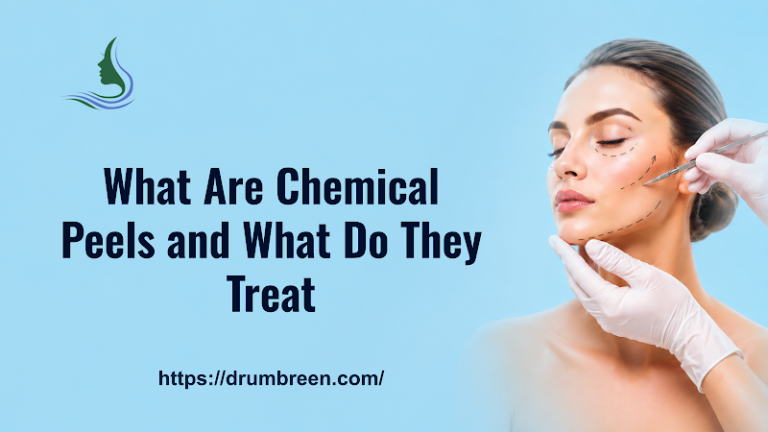
What Are Chemical Peels and What Do They Treat?
A chemical peel is a skin treatment that applies an acid solution to remove damaged outer layers of skin in a controlled way. New, smoother and more even skin grows back in its place.
Skin grafting in Islamabad with Dr. Umbreen Munir Minhas covers areas where skin has been lost to injury, burns or tumour removal, using your own skin or nearby tissue so the wound can heal and stay closed.
Medically reviewed by Dr. Umbreen Munir Minhas, MBBS, FCPS (Plastic Surgery). Last updated October 2026.


 Trustindex verifies that the original source of the review is Google.
 Trustindex verifies that the original source of the review is Google.
 Trustindex verifies that the original source of the review is Google.
 Trustindex verifies that the original source of the review is Google.
 Trustindex verifies that the original source of the review is Google.
 Trustindex verifies that the original source of the review is Google.
 Trustindex verifies that the original source of the review is Google.
 Trustindex verifies that the original source of the review is Google.
 Trustindex verifies that the original source of the review is Google.
 Trustindex verifies that the original source of the review is Google.
A skin graft is a thin sheet of skin taken from a donor site, such as the thigh, and placed on a wound. It has no blood supply of its own and must grow new vessels from the wound bed.
A flap is tissue moved with its own blood supply still attached. It can cover bone, tendon or joints where a graft would not survive.
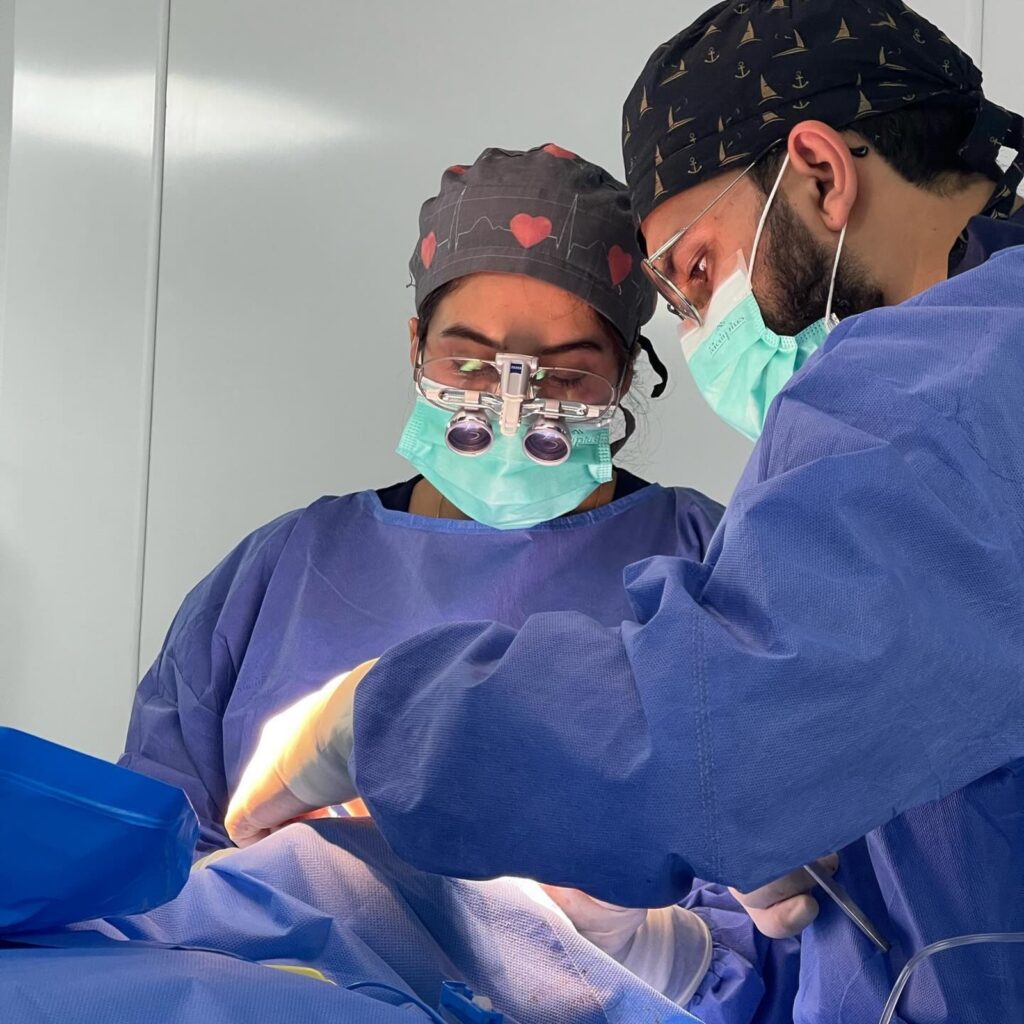
Deep burns destroy all skin layers, so the area cannot heal on its own. Grafting closes the wound and lowers the risk of tight scarring.
Road accidents, machine injuries and degloving injuries can tear away large areas of skin, sometimes exposing tendon or bone.
Removing a skin cancer or other growth can leave a gap too large to stitch. A graft or flap fills it neatly.
Long-standing wounds and pressure sores can be closed with a graft or flap once the wound bed is clean and healthy.
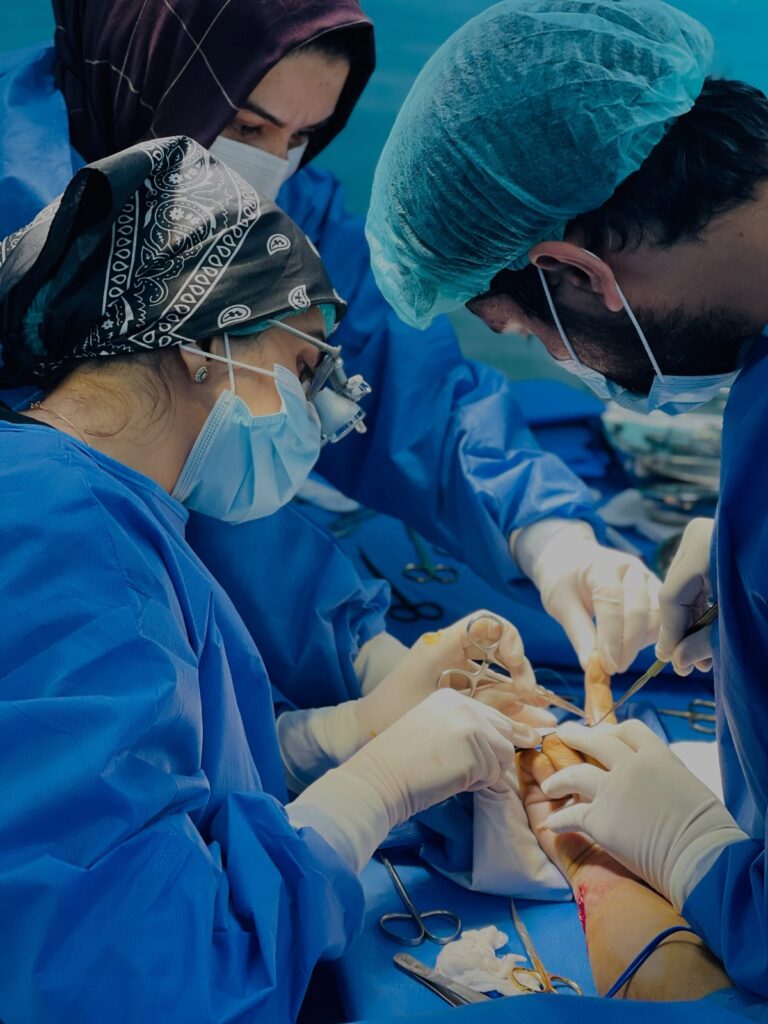
The upper layers of skin are shaved from the thigh. It covers large areas and survives well on a healthy wound bed.
All skin layers are taken from behind the ear or groin. It gives better colour and texture for the face and hands.
Skin next to the wound is rotated or advanced to cover it. It suits small defects on the face, hands and scalp.
Skin and muscle from a nearby region are moved on their blood supply. It suits deeper wounds over bone or tendon.
In one study, about 90% of split-thickness grafts took successfully, compared with 72% of full-thickness grafts. Grafted skin is usually a little different in colour and texture. Photos below are shared with consent.

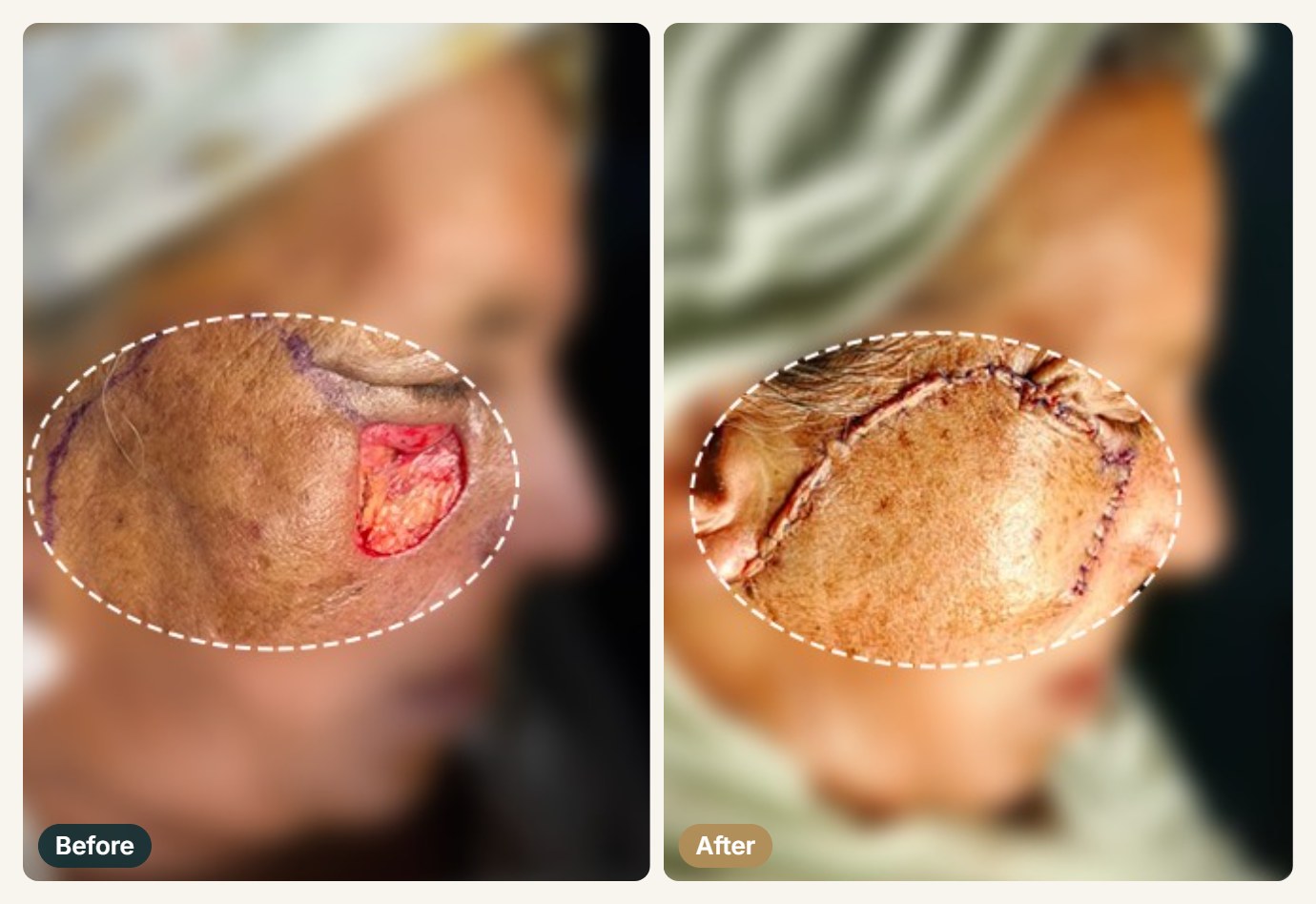

Illustrative images. See Dr. Umbreen Munir Minhas’s patient results in the before and after gallery.
Dr. Umbreen Munir Minhas checks the size and depth of the wound, its blood supply and any infection. The wound bed must be clean before any graft is placed.
Dressings, antibiotics or wound cleaning may come first. Blood sugar and nutrition are optimised, and smoking is stopped to help the graft survive.
Under local, regional or general anesthesia, skin is taken from the donor site and secured over the wound with stitches, staples or a pressure dressing.
The grafted area is kept still so the skin can attach. Small grafts may go home the same day, while larger ones need a short hospital stay.
| Time After Surgery | What to Expect |
|---|---|
| Days 3 to 5 | New blood vessels grow into the graft. |
| Days 5 to 7 | First dressing change to check graft take. |
| Weeks 1 to 2 | The thigh donor site heals over. |
| Weeks 2 to 6 | Graft firms up. Moisturising and gentle massage begin. |
| Months 6 to 12 | Colour and texture settle as the graft matures. |
Keep the graft protected from rubbing and sun for a year, as it burns and darkens easily. Pressure garments may be advised for burns.
The main risk is that part of the graft or flap does not survive. Smoking, infection, diabetes and movement of the area all raise this risk.
Grafted skin does not grow hair or sweat normally, and it never looks exactly like the original skin. Flaps can look bulky at first.
Your fee is confirmed after assessment, once the size of the wound and the method are agreed. Ask for one written estimate covering surgery, hospital stay and dressings.
| Factor | How It Affects Your Fee |
|---|---|
| Wound size | Larger areas need more theatre time. |
| Graft or flap | Flaps take longer than grafts. |
| Hospital stay | Bed rest and dressings add to the total. |
| Stages | Some wounds need cleaning before grafting. |
Ask whether dressing changes and follow-up visits are included, as these are a large part of graft care.
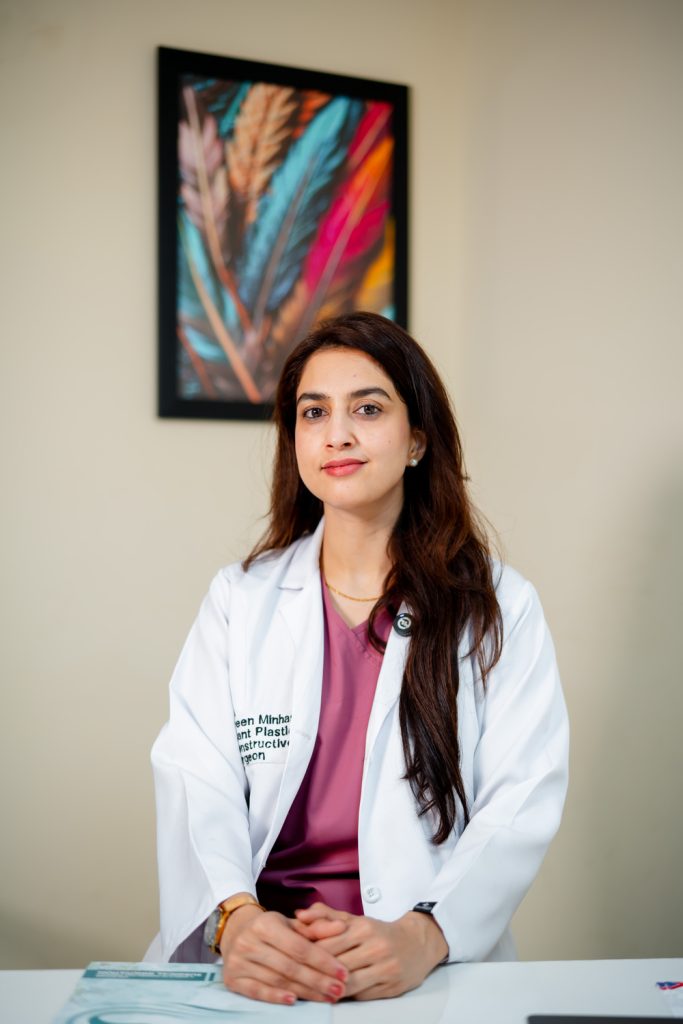
Skin grafts and flaps are both listed among her public services, along with burns, open wounds and head and neck reconstruction, so tissue coverage is a core part of her work.
Skin flap surgery moves tissue with its blood supply attached, while a graft depends on the wound bed to feed it.
| Feature | Skin Graft | Skin Flap |
|---|---|---|
| Own blood supply | No | Yes |
| Covers bare bone or tendon | Poorly | Yes |
| Thickness | Thin | Thicker, with fat or muscle |
| Surgery | Simpler | Longer and more complex |
| Contracture risk | Higher | Lower |
Plastic surgeons follow a reconstructive ladder, choosing the simplest method that will close the wound reliably and only moving up when it will not.
Dr. Umbreen Munir Minhas sees patients privately at Omer Diagnostic & Specialist Clinics (ODC), 12-A, LG Floor, CBC Plaza, G-8 Markaz, Islamabad, Monday to Saturday, 11:00 AM to 6:00 PM.
Bring photos of the wound, recent dressing notes and blood sugar reports. Fresh, severe injuries need a hospital emergency department first.
Choose a plastic surgeon with burns and reconstructive experience who prepares the wound properly, explains graft or flap options clearly and follows up every dressing change closely.
You are numbed or asleep during surgery. Afterwards, the donor site on the thigh is often more sore than the graft itself, like a graze, for the first several days.
Yes. Once a graft has taken, it becomes a lasting part of your skin. It may change colour and contract slightly as it matures over the first year.
A split-thickness donor site heals as a pale or slightly darker patch that fades over time. Full-thickness donor sites are stitched and leave a fine line.
Yes. Full-thickness grafts or local flaps are preferred on the face because they match its colour and texture better and shrink much less than thin grafts.
Yes, especially after scald and burn injuries. Grafts in children may need to be released later as the child grows, so regular follow-up visits over the years are important.
Patient guides from Dr. Umbreen Munir Minhas’s blog.
A chemical peel is a skin treatment that applies an acid solution to remove damaged outer layers of skin in a controlled way. New, smoother and more even skin grows back in its place.
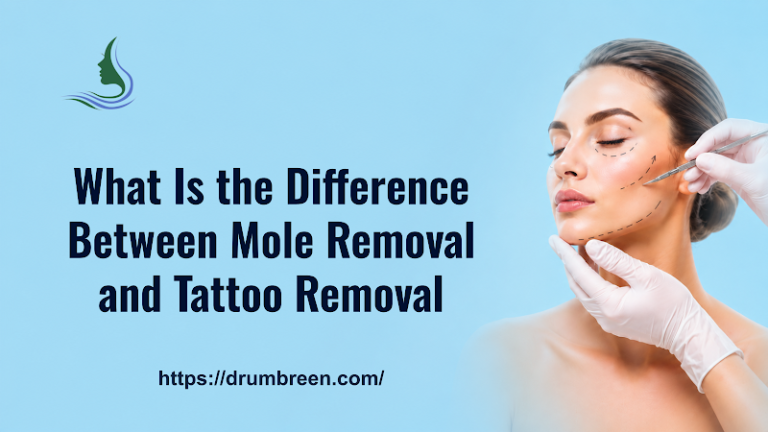
A mole is a growth of your own pigment cells, so removing it is a medical decision that may need a laboratory check. A tattoo is ink placed in the skin from outside, so removing it is about breaking that ink down, usually with…
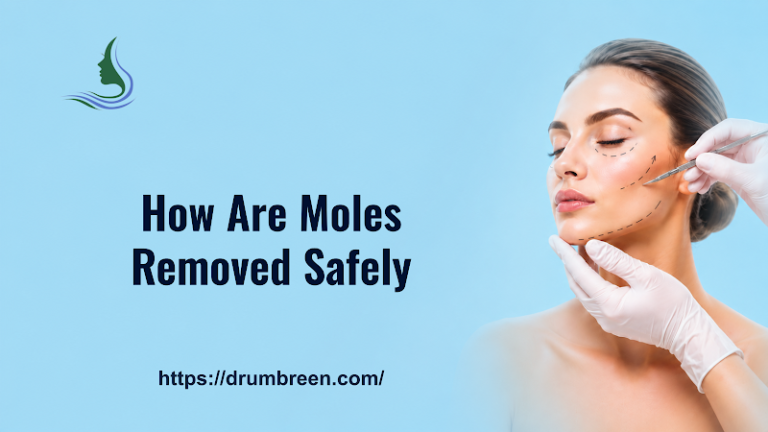
Moles are removed safely by a doctor, under local anaesthetic, using a method chosen after the mole has been examined. The most important safety step is checking whether the mole needs to be sent to a laboratory before anything…